Proudly serving Phoenix, Scottsdale, Mesa, Chandler, Glendale, Gilbert & surrounding areasCall or Text 24/7: 602-449-9183
Aerial view of suburban homes, desert vegetation, and distant mountains in Phoenix, AZ.

Bathroom Tile Installation and Flooring Upgrades for Phoenix, AZ Homes

Phoenix Tile Flooring installs and repairs bathroom tile throughout Phoenix and the surrounding metro. Our work includes shower tile, bathroom floors, large-format tile, natural stone, glass mosaics, grout repair and regrouting, and tile replacement. We also provide dustless tile removal when an old surface must come out before a new installation. Every project begins with a clear look at the surface, moisture conditions, layout, and material choices.

Phoenix bathrooms contend with hard water, summer highs over 110 degrees, winter nights near freezing, and expansive caliche soils across the Salt River Valley. Those conditions make waterproofing, expansion joints, substrate preparation, and cure timing especially important. Our crews set tile to Tile Council of North America handbook specifications and ANSI A108/A118 mortar and membrane standards, with shower-pan waterproofing that meets Uniform Plumbing Code requirements. We carry Arizona Registrar of Contractors licensing and general liability insurance, and we pull City of Phoenix permits when the project scope requires them.

Our work ranges from master bathroom renovations in Arcadia and Paradise Valley to guest bath refreshes in Ahwatukee and commercial restroom flooring from Desert Ridge to downtown. We have also installed tile in 1950s ranch homes near Encanto Park and new-build master suites, adapting each layout to the room's size, lighting, ventilation, and substrate.

Phoenix Tile Flooring provides bathroom tile installation throughout Phoenix and the surrounding metro, including Scottsdale, Tempe, Mesa, Glendale, Chandler, and Gilbert.

★ ★ ★ ★ ★4.9/5.0 Customer Rating · 26 Years of Tile & Flooring Experience · Thousands of Projects Completed · Licensed, Bonded & Insured · Serving Homeowners & Businesses

Phoenix Bathroom Tile Options & Benefits

What Does Bathroom Tile Installation Include?

A durable bathroom installation begins before the first tile is set. The essentials are a flat, stable substrate, the correct thinset, properly placed expansion joints, and a layout planned around corners, fixtures, niches, and drains.

Every bathroom project includes surface evaluation, moisture testing where relevant, tile layout planning, and a walkthrough of materials suited to the room's size, lighting, and ventilation. Walk-in showers, curbless entries, benches, and niches are accounted for before waterproofing begins.

Small guest bathrooms can benefit from large-format tile that reduces grout lines and makes the room feel more open. Master bathrooms offer room for mixed materials, accent niches, custom shower enclosures, and layouts that separate wet-area performance from decorative wall finishes.

Benefits of a Planned Tile Installation

A complete installation plan connects waterproofing, tile selection, layout, setting methods, grout, and finish details. That coordination helps the finished bathroom handle moisture while keeping joints, transitions, and exposed edges visually consistent.

  • Flood-tested shower-pan waterproofing before tile is installed
  • Tile bodies and slip resistance selected for each wet area
  • Large-format layouts that reduce grout lines in smaller rooms
  • Expansion-joint planning for Phoenix temperature movement
  • Metal trim, bullnose, or mitered finishes on exposed edges
  • Mortar-coverage checks in shower floors and other wet areas
  • HEPA-filtered dust containment during tile removal
  • A free written estimate divided into material and labor
Bathroom Tile Services

Bathroom Tile Installation & Repair Services

Choose a focused repair, a new floor, or a complete shower and bathroom update. Each service is scoped around the existing surface, moisture exposure, chosen material, pattern complexity, and the finish details needed at drains, niches, walls, and transitions.

Shower Tile and Waterproofing

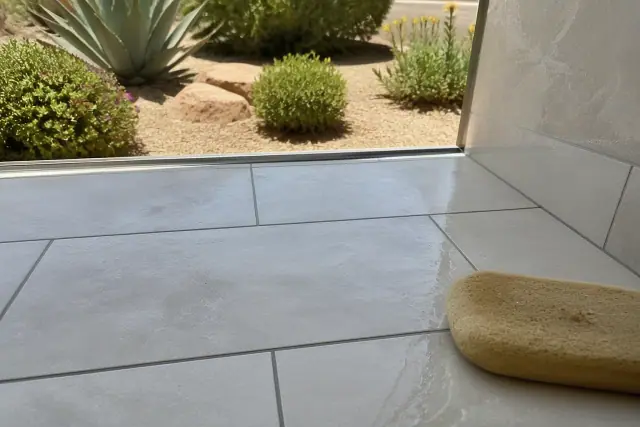
Damp sponge wiping excess mortar from newly installed stone bathroom tiles in Phoenix, AZ.

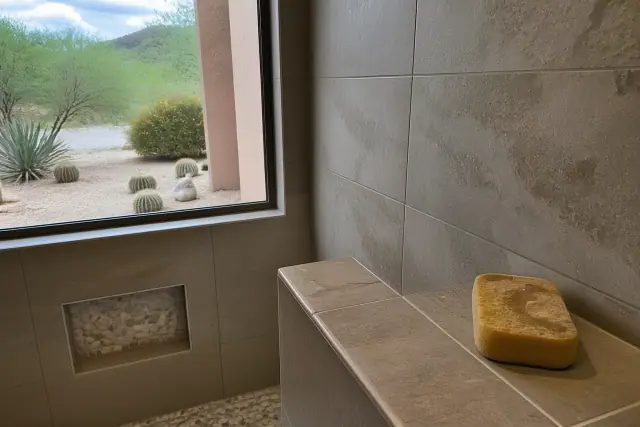
We plan tile size, pattern, niche placement, grout width, drain slope, and waterproofing for walk-in, curbless, and bench-equipped showers. The pan is lined or membrane-covered to Uniform Plumbing Code standards and flood-tested before tile goes up. Phoenix shower tile installation typically runs $2,500 to $8,000, while premium marble surrounds can exceed $25 per square foot.

Request Estimate

Bathroom Floor Tile Installation

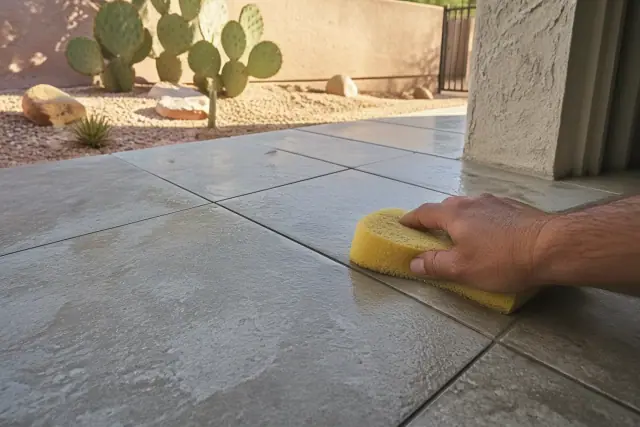
Damp sponge wiping excess grout from newly installed stone bathroom floor tiles in Phoenix, AZ.

Floor work starts with deflection, flatness, moisture, and crack checks so the underlayment and setting method fit the substrate. A standard 5x8 guest bathroom demo and new floor tile installation generally falls between $1,000 and $1,500. A full 6x9 bathroom remodel using 12x24 tile, including shower or tub-surround work, commonly runs $5,000 to $12,000 based on material grade and layout.

Request Estimate

Tile Replacement and Dustless Removal

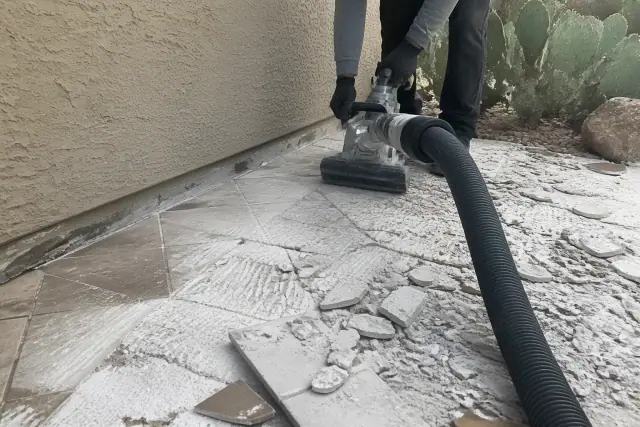
Industrial vacuum hose removing debris during bathroom tile demolition in Phoenix, AZ.

HEPA-filtered vacuum extraction connected to demolition equipment contains silica dust at the source, an important consideration under OSHA's respirable crystalline silica standard and in occupied homes. After removal, we expose and address rotted plywood, rusted cement-board fasteners, cracked mortar beds, and other damage before resetting tile. For repairs in 1970s Phoenix ranch homes, we seek a discontinued match where possible or plan a complementary accent or cleaner section replacement.

Request Estimate

Grout Repair and Regrouting

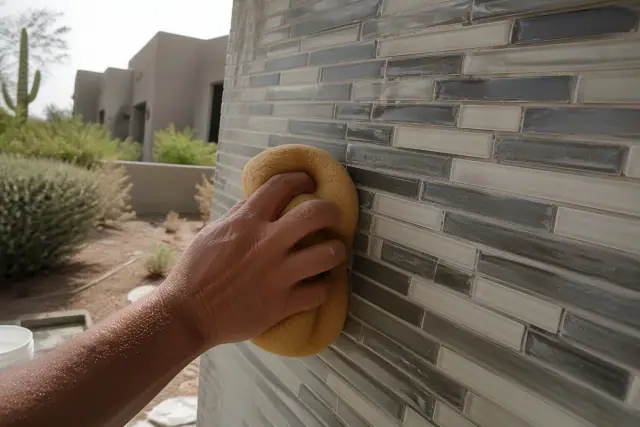
Damp sponge wiping excess grout from newly installed stone bathroom tiles at a jobsite in Phoenix, AZ.

Cracked, crumbling, discolored, or separated grout is evaluated for the water intrusion or substrate movement that may be behind it. We remove failing grout to full joint depth instead of skim-coating it, then use sanded, unsanded, epoxy, or cementitious grout suited to the joint width, traffic, and moisture exposure. A penetrating sealer helps slow staining and hard-water absorption after cure.

Request Estimate

Natural Stone Tile Installation

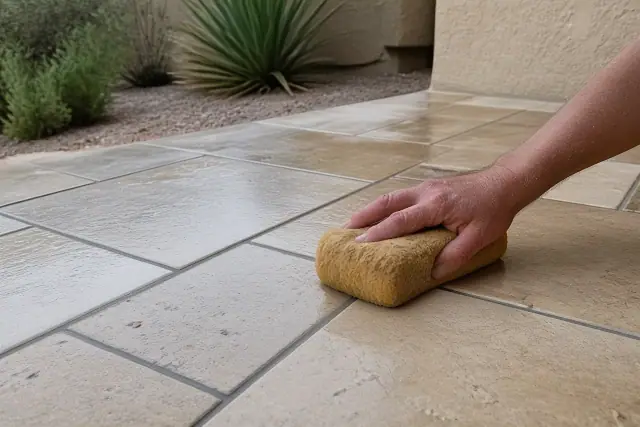
Damp sponge wiping excess mortar from between newly installed natural stone bathroom tiles in Phoenix, AZ.

Marble, slate, and travertine require material-specific cutting, lippage control, filling, and sealing. We seal porous stone before grouting to limit grout haze and staining, then reseal after the grout cures. Installed stone tile runs roughly $5 to $45 per square foot depending on species, finish, and whether the material is slab or tile format.

Request Estimate

Glass Mosaic and Accent Tile

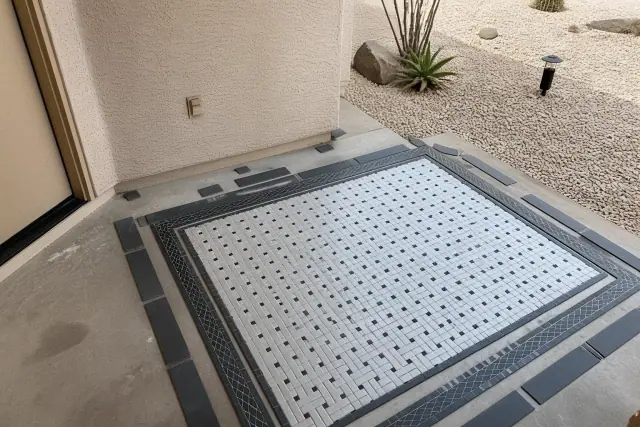
Glass mosaic and accent tiles laid out on a floor for a bathroom renovation project in Phoenix, AZ.

Glass tile is cut with a wet saw and a diamond blade rated for glass, while mosaic sheets are aligned carefully so their seams do not read as a grid after grouting. Installed glass and mosaic tile ranges from $10 to $180 per square foot depending on the material, making niches, accent strips, shampoo ledges, and feature walls practical focal points. Exposed edges are finished with metal trim, bullnose, or mitered corners planned during layout.

Request Estimate
Bathroom Tile Materials

Types of Bathroom Tile Materials

The right tile depends on whether it will sit on a shower pan, bathroom floor, wet wall, niche, or accent surface. Water absorption, slip resistance, tile size, substrate flatness, sealing needs, edge treatment, and maintenance all affect the recommendation.

Porcelain bathroom tiles with leveling spacers installed on a construction site in Phoenix, AZ.

Porcelain Tile

Porcelain is fired at higher temperatures than ceramic and is rated for water absorption below 0.5%. Its low absorption and durability make it a strong option for shower pans and high-traffic bathroom floors.

  • Material typically runs roughly $2 to $15 per square foot
  • Installed Phoenix pricing commonly ranges from $9.70 to $18.40 per square foot
  • Wet-area slip resistance is selected for shower and floor use
  • Rectified formats are planned to limit lippage
  • Large pieces are back-buttered to improve mortar contact
Request Estimate
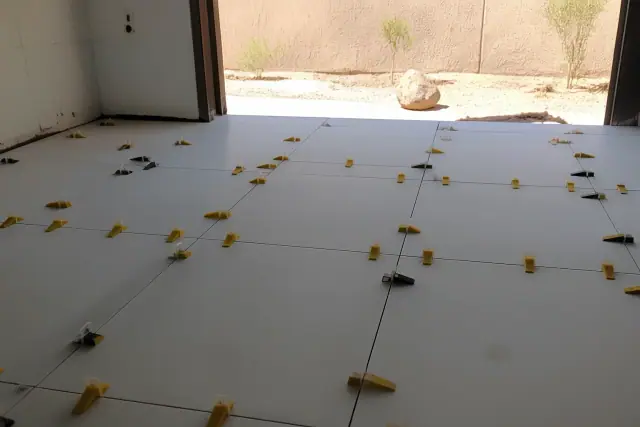
Ceramic tile installation with leveling clips and wedges on a bathroom floor in Phoenix, AZ.

Ceramic Tile

Ceramic offers broad style and finish choices for bathroom floors and walls, though its water absorption is higher than porcelain's. Placement, tile body, and wet-area exposure are considered before it is selected for a specific surface.

  • Mid-grade Phoenix installation runs roughly $6.94 per square foot
  • Material ranges from about $4 to $35 per square foot by style and origin
  • Trowel notch and thinset are matched to tile format
  • Joint width is planned before material is ordered
  • Floor and wall placement are evaluated separately
Request Estimate
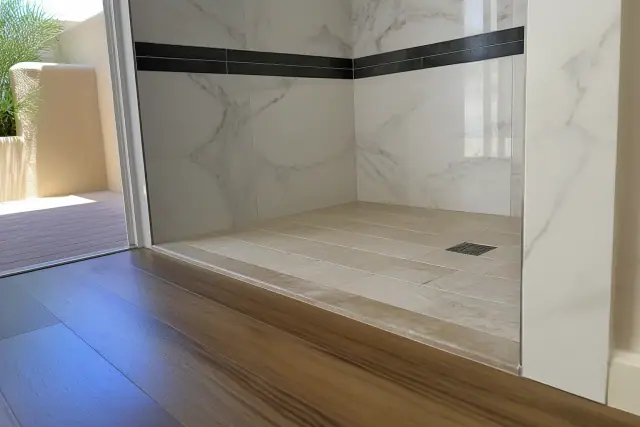
Marble, slate, and travertine tile installation with a transition strip to a wood floor in a Phoenix, AZ bathroom.

Marble, Slate, and Travertine

Natural stone brings distinct veining, clefting, and texture, but it also absorbs water and staining agents faster than porcelain. Installation and care are adjusted to each stone rather than treating all natural materials alike.

  • Marble is protected from scratching, etching, and acidic cleaners
  • Slate's natural clefting requires careful lippage control
  • Travertine pits may be filled with color-matched grout or resin
  • Penetrating sealer is applied before and after grouting
  • Wet-area care accounts for Phoenix hard-water deposits
Request Estimate
A damp sponge cleaning excess mortar from new glass and mosaic bathroom tiles at a residential site in Phoenix, AZ.

Glass and Mosaic Tile

Glass and mosaic tile create focused color, reflect light, and fit the smaller planes of niches and accent bands. Precision cutting and consistent sheet alignment are essential because chips and uneven grid seams remain visible after grout is installed.

  • Diamond blades rated for glass reduce chipping
  • Mosaic sheet joints are aligned across seams
  • Accent strips add detail without covering a full wall
  • Niches and shampoo ledges become practical focal points
  • Trim is planned before cuts are made
Request Estimate
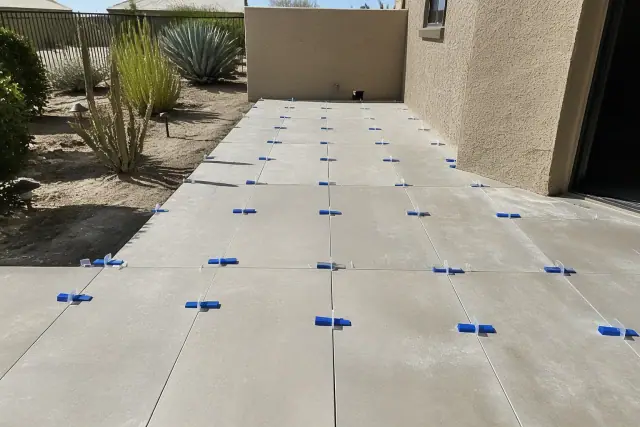
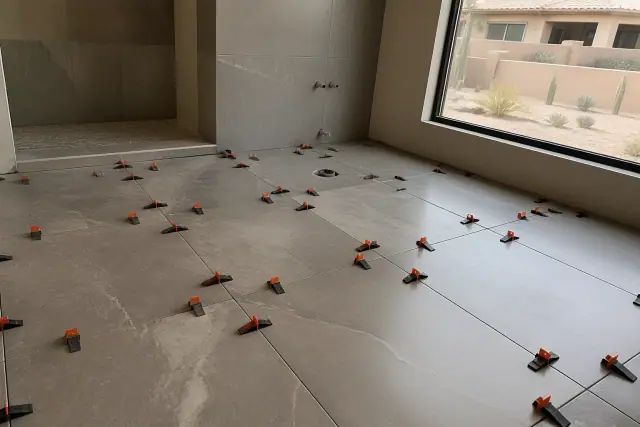
Large-format bathroom tiles with leveling spacers and wedges during installation in a Phoenix, AZ home.

Large-Format Tile

Large-format tile is generally 15 inches or longer per side. It reduces grout lines and creates a contemporary surface, but successful installation depends on a flatter substrate, planned offsets, back-buttering, and mortar coverage checks.

  • Substrate flatness is checked to a TCNA tolerance of 1/8 inch over 10 feet
  • Rectified tile 15 inches or longer uses a 1/3 offset rather than a 50/50 bond
  • Back-buttering reduces hollow spots behind larger pieces
  • Periodic tile pulls verify 95% mortar contact in wet areas
  • Fewer grout lines can visually open a small guest bathroom
Request Estimate
Finding Your Right Fit

Choosing the Right Bathroom Tile Approach

A guest bath floor, curbless shower, stone surround, and commercial restroom each call for a different combination of substrate, waterproofing, tile body, finish, and maintenance. We compare those factors during the walkthrough so the layout and setting method are settled before material is ordered.

Standards-Based Waterproofing

Shower pans, membranes, mortar, and setting methods follow the TCNA handbook, ANSI A108/A118 standards, and applicable Uniform Plumbing Code waterproofing requirements. Flood-testing catches a puncture or bad slope while the wall is still open rather than two years later after moisture has reached the subfloor.

Phoenix-Aware Preparation

Low humidity changes how quickly thinset and grout cure, while hard water, temperature swings, and caliche-related movement can expose weak preparation. We account for those local conditions through moisture checks, expansion-joint planning, flatness correction, material selection, and properly timed sealing.

Licensed and Insured Project Care

Phoenix Tile Flooring carries Arizona Registrar of Contractors licensing and general liability insurance. We identify when plumbing, drain relocation, or structural work changes the permit requirements, protect occupied homes with drop cloths and dust containment, and clean the work area before leaving.

What Sets Us Apart

Why Choose Phoenix Tile Flooring for Bathroom Tile Installation?

The finished surface is only as dependable as the preparation beneath it. Our approach connects scope, material, waterproofing, layout, mortar coverage, grout, sealing, edge finish, and site protection in one project plan, with a free written estimate that separates material and labor.

Request a Free Written Estimate

Leaking Shower Pans

Many costly shower repairs trace to a punctured liner or a pre-slope mortar bed that does not direct water to the drain. A properly installed membrane and pre-tile flood test can reveal the problem before walls close and moisture reaches the framing or subfloor.

Lippage and Cracked Grout

Uneven substrates can leave raised tile edges and grout cracks within the first year. Flatness correction, the correct notch trowel, back-buttering, planned joint widths, and an appropriate large-format offset address the causes instead of disguising the symptom.

Hard-Water Mineral Buildup

Phoenix hard water can leave mineral deposits on shower walls, especially porous natural stone. Selecting low-absorption tile for constant-moisture areas, sealing stone and grout on schedule, and following material-specific care instructions helps manage that exposure.

Hidden Substrate Damage

Leaks around tub surrounds and shower curbs can remain unnoticed for years. Once old tile and thinset are removed, rotted plywood, cracked mortar beds, rusted fasteners, damaged cement board, and slab cracks must be evaluated rather than covered by new material.

Airborne Demolition Dust

Traditional tile demolition can spread silica dust into HVAC returns and adjoining rooms. Dustless removal connects HEPA-filtered extraction to demolition equipment so debris is captured near the point of removal, reducing the dust released through an occupied home.

Fast Dry-Climate Curing

Phoenix's low humidity can accelerate grout cure compared with humid coastal markets. Sealer must be applied within the manufacturer's cure window, while thinset, waterproofing membranes, and grout still need their required waiting periods rather than a rushed schedule.

How it works

Our Bathroom Tile Installation Process

The process moves from a room-specific scope to surface preparation, waterproofing, tile setting, grout, sealing, and final cleanup. Necessary cure and test periods remain part of the schedule so the visible finish is supported by sound work beneath it.

01.

Walkthrough and Written Estimate

We review the bathroom, the requested surfaces, moisture exposure, design goals, and any plumbing or structural changes. The resulting free written estimate separates material and labor and includes a project-specific schedule.

02.

Substrate and Moisture Assessment

We check subfloor deflection, surface flatness, cracks, moisture where relevant, and the condition of plywood, cement board, mortar beds, or concrete slab. Damaged material is repaired or replaced, and an isolation or uncoupling membrane is used where the application calls for it.

03.

Material and Layout Planning

Tile size, pattern, grout width, trim, cuts, niche placement, wet-area slip resistance, and drain slope are resolved before ordering and cutting. The plan accounts for room size, lighting, ventilation, mixed materials, and the maintenance needs of porcelain, ceramic, stone, or glass.

04.

Preparation and Waterproofing

Surfaces are flattened or rebuilt as needed, shower floors receive the correct pre-slope, and membranes or liners are installed for the wet-area design. We flood-test the shower pan before setting tile and verify permit needs when plumbing, drain, or structural work is included.

05.

Thinset and Tile Setting

Thinset and notch trowel are matched to the tile size, and large-format pieces are back-buttered. Rectified pieces use the planned 1/3 offset where applicable, and periodic tile pulls confirm the mortar contact required for wet areas.

06.

Grout, Sealing, and Walkthrough

After tile sets for 24 to 48 hours, we grout with material suited to the joint width and exposure, then seal within the manufacturer's cure window where sealing applies. We review material-specific care, remove containment and drop cloths, and clean the site before completion.

Plan Your Bathroom Tile Project

Schedule a Bathroom Tile
Installation
Consultation

Tell us whether you are planning a floor retile, shower, grout repair, partial replacement, or full bathroom renovation. We will evaluate the surface, material, layout, waterproofing, and permit needs and provide a free written estimate with material and labor separated.

Bathroom Tile Help

Bathroom Tile Installation FAQs

These answers cover the installation choices, costs, timing, maintenance, and preparation details Phoenix property owners most often ask about before bathroom tile work begins.

Call Our Tile Installers

Common mistakes include skipping the shower-pan flood test, using the wrong trowel notch, ignoring substrate flatness, and failing to slope the shower floor correctly. Poor layout math can also leave uneven cuts when several tile sizes meet at walls, corners, or niches.

The 1/3 rule offsets each row by one-third of the tile length instead of using a half, or 50/50, running bond. It is used for rectified tile 15 inches or longer per side because slight warpage can create visible lippage when high points align.

Mid-grade ceramic installation runs roughly $6.94 per square foot, while installed porcelain commonly ranges from $9.70 to $18.40 per square foot. A 5x8 guest bathroom floor demo and retile generally costs $1,000 to $1,500, a full 6x9 bathroom with 12x24 tile and shower or tub-surround work commonly costs $5,000 to $12,000, and shower-specific work ranges from $2,500 to $8,000; tile, pattern, and substrate condition affect the final estimate.

Floor tile may sit over cement backer board, an uncoupling membrane, or a properly cured mortar bed, depending on whether the base is wood or concrete. Shower floors also need a waterproofing membrane or liner beneath the mortar bed, while cracked concrete may call for an isolation membrane after moisture and crack checks.

A standard guest bathroom floor retile typically takes one to two days. A full shower and floor installation with waterproofing, curing, and grouting usually takes three to five days, while a larger master bathroom renovation with demolition, plumbing coordination, and natural stone can extend to one to two weeks.

Tile installation by itself typically does not require a City of Phoenix Development Services Department permit. Moving plumbing, changing the shower-pan drain location, or making structural changes does require one, so permit needs are identified during the walkthrough and handled when the scope calls for it.

We can often search manufacturer databases and supplier networks for an older or discontinued tile, but an exact dye-lot match may not exist after years of use. If it is unavailable, we can discuss a complementary accent or retiling the affected wall or floor section; grout color is often easier to match than the tile itself.

Porcelain and glass handle constant-moisture zones well, and porcelain is rated for water absorption below 0.5%. Natural stone can also be used, but it needs sealing before and after grouting, material-specific cleaning, and a wet-area maintenance plan.

Natural stone in wet areas and sealed shower grout should generally be resealed roughly every 12 to 18 months. The material, use, cleaner, hard-water exposure, and sealer manufacturer's guidance can affect the appropriate timing.

Dustless removal connects HEPA-filtered vacuum extraction directly to demolition equipment. Capturing dust at the source limits the amount that can settle in adjoining rooms or enter HVAC returns, which is especially useful while a home remains occupied.

A large tile spans more of the surface, so a hump or low spot can create lippage, hollow areas, and cracked grout. We check flatness to the stated TCNA tolerance, correct the surface where needed, back-butter the tile, and verify mortar contact during setting.

The grout must fit the joint width, traffic, and water exposure. Epoxy grout offers stronger stain and water resistance for shower floors, while sanded, unsanded, or cementitious grout may be appropriate elsewhere based on the joint and application.

Exposed corners and niche edges can be finished with metal trim, bullnose tile, or mitered cuts, depending on the tile and design. Planning the trim during layout avoids raw edges and helps joints align cleanly around niches, ledges, and wall transitions.