Proudly serving Phoenix, Scottsdale, Mesa, Chandler, Glendale, Gilbert & surrounding areasCall or Text 24/7: 602-449-9183
Aerial view of suburban homes, desert vegetation, and distant mountains in Phoenix, AZ.

Dustless Tile Removal and Subfloor Surface Preparation in Phoenix, AZ

Phoenix Tile Flooring provides dustless tile removal in Phoenix for ceramic, porcelain, natural stone, and large-format tile. Our crews also remove thin-set and older tile adhesive so the subfloor can be prepared for the next flooring phase. We serve residential and commercial projects with shrouded demolition tools connected to HEPA-filtered collection systems. Every job begins with a site assessment to identify tile type, mortar thickness, access, and surface-protection needs.

Traditional demolition can release respirable crystalline silica into cabinetry, ductwork, and living areas. Phoenix homes often run air conditioning nearly year-round, so uncontained dust can enter return vents and recirculate through the house. Our point-of-impact vacuum shrouds capture particulate as tile and mortar break free, with plastic barriers and sealed vents adding secondary containment. We explain the equipment, process, and price per square foot before work starts.

Our crews carry an Arizona Registrar of Contractors license and active general liability coverage, and our methods are consistent with National Tile Contractors Association reference standards and Tile Council of North America installation guidelines.

Phoenix Tile Flooring provides dustless tile removal from Phoenix across the surrounding metro area, including Scottsdale, Tempe, Mesa, Chandler, and Glendale.

★ ★ ★ ★ ★4.9/5.0 Customer Rating · 26 Years of Tile & Flooring Experience · Thousands of Projects Completed · Licensed, Bonded & Insured · Serving Homeowners & Businesses

Dustless Tile Removal Options & Benefits

What Is Dustless Tile Removal?

Dustless tile removal pairs a demolition hammer or grinder with a rigid vacuum shroud that seals around the cutting head. A HEPA-filtered vacuum pulls dust and debris into a sealed collection canister as the tool breaks the tile bond.

The same shrouded, vacuum-connected equipment is used to scrape or grind thin-set and mortar residue instead of leaving that dusty step until the end. Plastic sheeting, protected fixtures, and temporarily sealed HVAC vents provide a second containment layer around the work zone.

For larger commercial or multi-room projects, air quality can be monitored during demolition to verify containment. If dust escapes, the shroud seal or vacuum draw is corrected before work continues.

Benefits of Source-Capture Removal

Capturing particulate where tile and mortar break limits how much dust can reach finished surfaces, occupied rooms, or the HVAC system. The result is a more controlled removal phase and a cleaner transition to replacement flooring.

  • Captures airborne particulate at the point of impact
  • Uses HEPA filtration rated for particles down to 0.3 microns
  • Supports 99.97% to 99.99% source capture, depending on equipment and filter grade
  • Helps keep dust out of return vents and ductwork
  • Reduces residue on cabinetry, fixtures, and baseboards
  • Removes thin-set and mortar dust as work progresses
  • Leaves a vacuumed subfloor ready for the next flooring phase
  • Keeps captured dust and debris sealed for transport
Material-Specific Removal

Professional Dustless Tile Removal Services

Tile density, size, mortar depth, and adhesive type all change how a floor should be removed. Our process adjusts tool choice, shroud width, blade speed, suction, and sectioning to suit each surface.

Ceramic Tile Removal

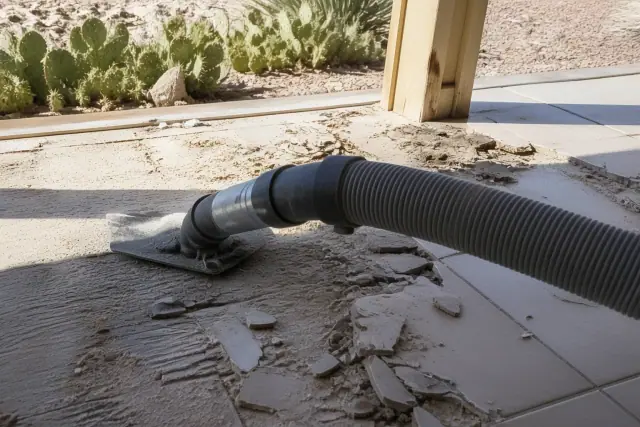
Industrial vacuum hose removing tile debris during a floor demolition in Phoenix, AZ with desert plants in the background.

Ceramic is common in Phoenix homes built from the 1970s through the early 2000s. Shrouded demolition tools break the tile-to-mortar bond while HEPA suction keeps a standard 12x12 ceramic floor from coating nearby baseboards in white dust.

Request Estimate

Porcelain Tile Removal

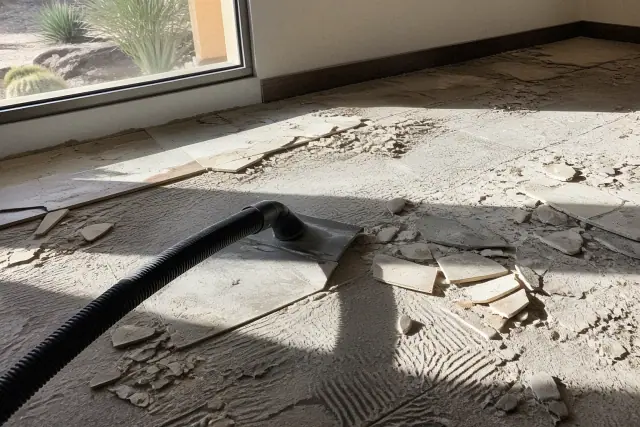
Industrial vacuum tool removing porcelain floor tiles in a Phoenix, AZ home with sunlight casting shadows.

Porcelain is denser and harder than ceramic, requiring more mechanical force and producing more fine silica dust per square foot. Blade speed, shroud pressure, and vacuum draw are adjusted for thicker, harder-fired tile so capture remains consistent.

Request Estimate

Natural Stone Tile Removal

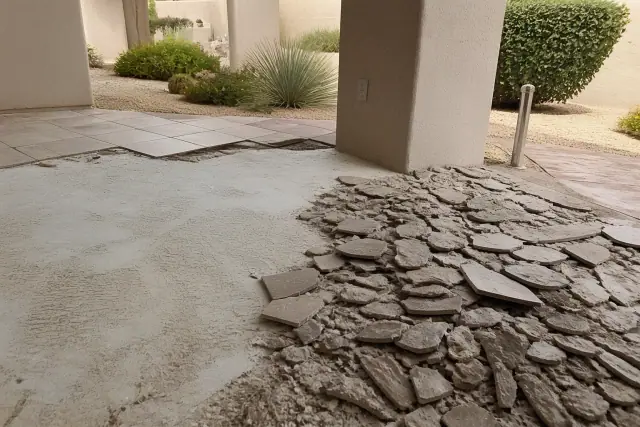
Natural stone tile removal in progress on a residential floor in Phoenix, AZ.

Travertine, slate, and granite often sit in thicker mortar beds and can shatter unpredictably. Systematic scoring and sectioning control both debris and dust while helping preserve the subfloor for the replacement surface.

Request Estimate

Large-Format Tile Removal

Industrial vacuum hose removing tile debris during a floor demolition project in Phoenix, AZ.

Large-format tile measures 15 inches by 15 inches or larger and creates a wider demolition footprint with every strike. Wider shroud attachments and higher-capacity vacuum units help match that larger removal area without sacrificing dust capture.

Request Estimate

Dustless Thin-Set Removal

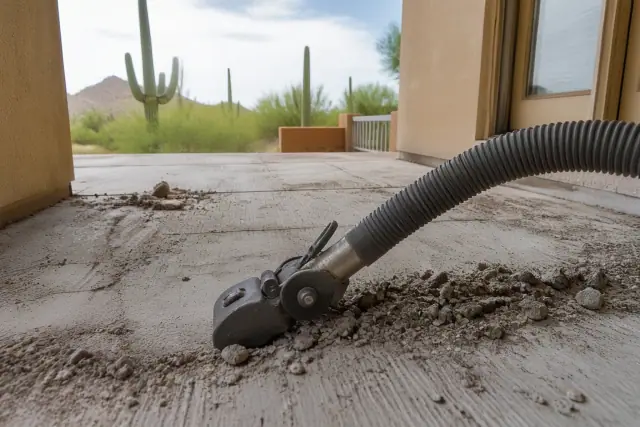
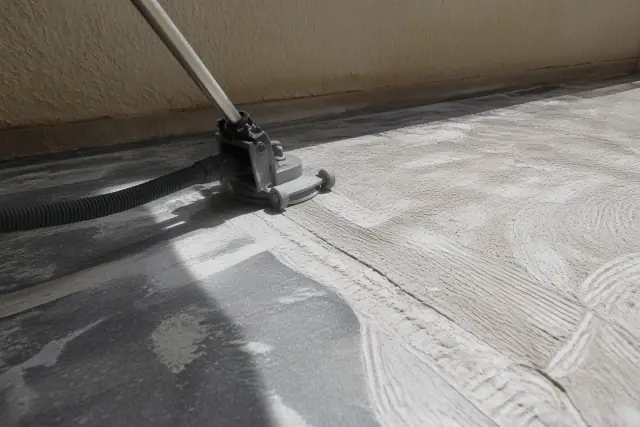
Industrial vacuum hose capturing debris during dustless tile removal on a concrete slab in Phoenix, AZ.

Thin-set left after tile removal must be ground down before new flooring is installed, and an unshrouded grinder can generate as much dust as the tear-out. Vacuum-connected grinding equipment removes that residue while keeping it contained.

Request Estimate

Tile Adhesive and Mastic Removal

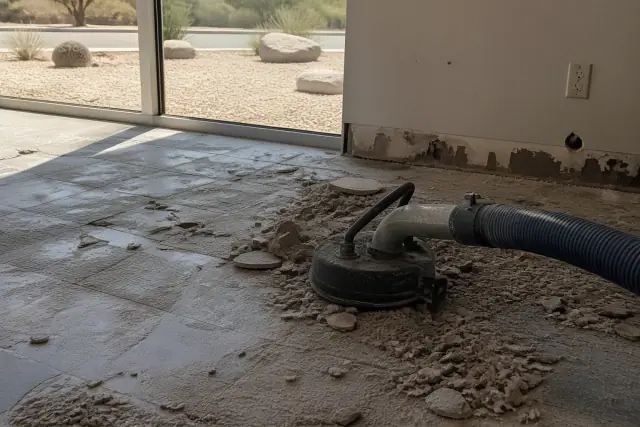
Industrial vacuum hose attached to a grinder removing floor adhesive from a concrete slab in Phoenix, AZ.

Mastic-based adhesive is common in Phoenix homes built before the 1990s and can be more stubborn than modern thin-set. When construction age and material indicate a risk, pre-1980 mastic is tested before mechanical removal begins.

Request Estimate
Room & Property Needs

Dustless Removal for Different Applications

Containment and tool access change from a tight shower stall to a large commercial floor. The work zone, adjacent finishes, ventilation, adhesive condition, and operating schedule are considered before equipment is staged.

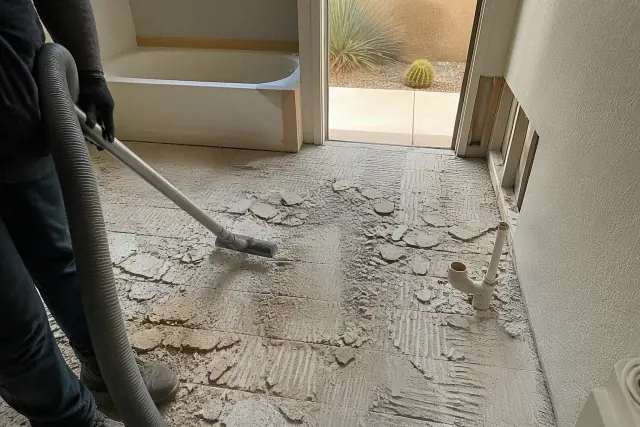
Industrial vacuum hose removing debris during a bathroom tile demolition job in Phoenix, AZ.

Bathroom and Shower Tile Removal

Bathroom floors and shower stalls sit close to bedrooms, hallways, and ventilation, leaving little buffer for escaped dust. Doorways and vents are sealed before removal, including projects that cut through cement board or older mud-set assemblies.

  • Bathroom floor tile tear-out
  • Shower wall and stall removal
  • Doorway and vent containment
  • Cement-board cutting control
  • Older mud-set removal planning
Request Estimate
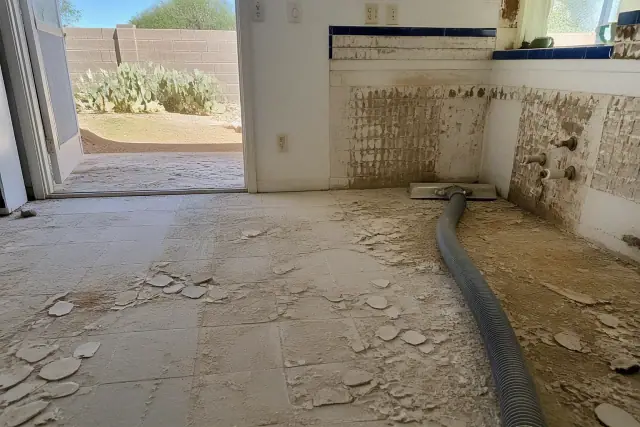
Industrial vacuum hose removing kitchen tile during a renovation project in Phoenix, AZ.

Kitchen Floor and Backsplash Removal

Kitchen removal takes place beside cabinetry, appliances, countertops, and electrical outlets that need protection from impact and dust. Backsplash work uses tighter shroud control, while floor removal is sectioned around fixed features.

  • Kitchen floor tile removal
  • Backsplash tile tear-out
  • Cabinetry and counter protection
  • Controlled work near outlets
  • Sectioned removal around appliances
Request Estimate
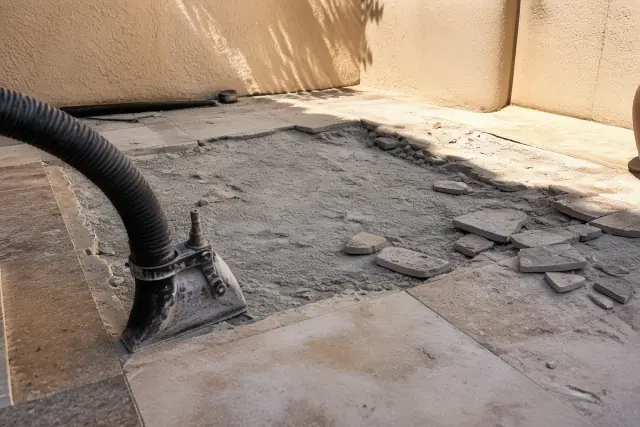
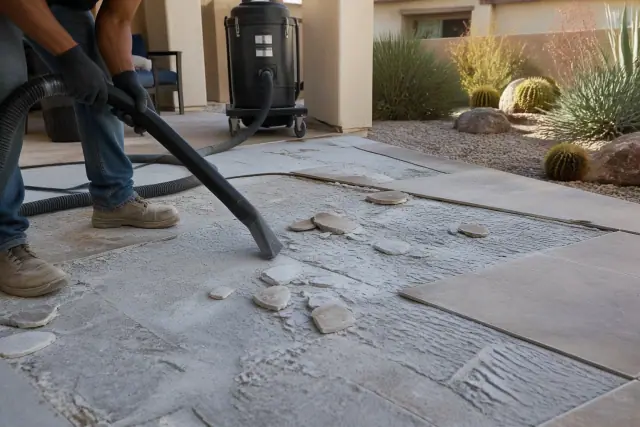
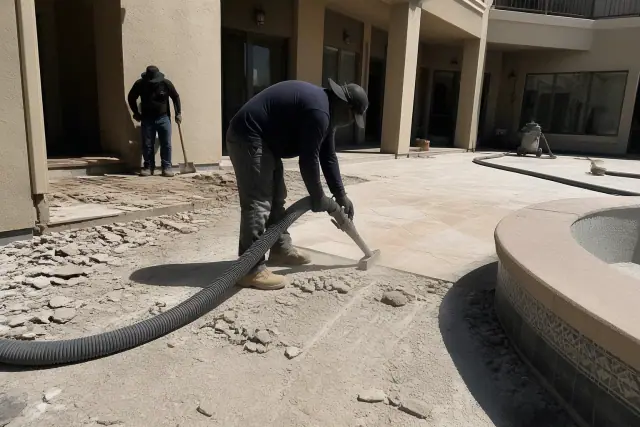
Industrial vacuum hose removing patio tiles during a residential demolition project in Phoenix, AZ.

Patio and Outdoor Tile Removal

Outdoor tile in Phoenix faces direct sun, temperature-cured adhesive, thermal expansion, and intense UV exposure. Tile that has been installed for a decade or more may sit over sun-baked adhesive or brittle mortar, so the removal approach is adjusted to how the surface breaks free.

  • Patio floor tile removal
  • Pool-deck surface removal
  • Natural stone and large-format tile
  • Sun-baked adhesive evaluation
  • Thermal expansion crack assessment
Request Estimate
Residential tile removal showing debris and concrete flooring at a home in Phoenix, AZ.

Residential Tile Removal

Residential work ranges from single-bathroom updates in Maryvale to whole-house floor replacement in North Phoenix. The same containment standard applies regardless of square footage, with work-zone protection adjusted to the home's layout.

  • Single-room updates
  • Multi-room flooring projects
  • Whole-house tile tear-outs
  • Occupied-area containment
  • Layout-specific equipment access
Request Estimate
Industrial tool removing floor tiles with a vacuum hose at a job site in Phoenix, AZ.

Commercial Tile Removal

Retail spaces, offices, and medical facilities often require phased or after-hours tile removal to reduce operational disruption. Scheduling, air monitoring, sealed debris transport, and construction-waste disposal are coordinated around the facility's needs.

  • Retail flooring removal
  • Office tile tear-outs
  • Medical-facility work zones
  • Phased or after-hours scheduling
  • Arizona-compliant debris disposal
Request Estimate
Finding Your Right Fit

Choosing the Right Dustless Removal Approach

The right setup depends on tile material, size, mortar depth, substrate, room access, nearby finishes, and the next flooring phase. A site assessment brings those variables together before equipment, containment, and removal sequence are selected.

Point-of-Impact Dust Capture

Rigid shrouds connect demolition hammers and grinders directly to HEPA-filtered vacuums. Capturing dust as tile and mortar break is more effective than relying on an unshrouded tool with a shop vacuum nearby.

Licensed and Insured Tile Crew

Our tile removal crews carry an Arizona Registrar of Contractors license and active general liability coverage. Work methods are consistent with National Tile Contractors Association reference standards and Tile Council of North America installation guidelines.

Site-Specific Removal Plan

We scope square footage, tile type, mortar thickness, equipment access, and material-testing needs before the first tile comes up. The assessment also gives you a clear explanation of the planned equipment, containment steps, and square-foot pricing.

What Sets Us Apart

Why Choose Us for Dustless Tile Removal?

Phoenix Tile Flooring combines material-specific demolition with source capture, secondary containment, and job-specific planning. We protect adjacent finishes, address thin-set as work progresses, monitor containment when the project calls for it, and leave the exposed subfloor vacuumed for the next installation phase.

Request Site Assessment

Respirable Silica Exposure

Cutting, chipping, and hammering ceramic or porcelain can release respirable crystalline silica fine enough to lodge deep in lung tissue. OSHA regulates construction exposure under 29 CFR 1926.1153, while Phoenix is already within a federally designated PM10 nonattainment area where airborne dust is closely tracked.

HVAC Dust Recirculation

Across Phoenix's 517.9 square miles of arid terrain, homes often run air conditioning nearly year-round. Dust from an uncontained tear-out can enter return vents and recirculate through the entire house, making sealed vents and work-zone barriers important parts of the setup.

Extensive Post-Demolition Cleanup

Uncontained tile dust settles into cabinetry, baseboards, furniture, HVAC coils, and ductwork. Professional duct cleaning after traditional demolition can add several hundred dollars, while source capture and included cleanup address residue during the removal itself.

Older Mastic Material Risk

Some mastic in homes built before 1980 may contain asbestos, so mechanical removal should not begin until age and material risk are evaluated. Testing when indicators are present prevents a routine tear-out from becoming an uncontrolled material-handling problem.

Dense Tile and Thick Mortar

Dense porcelain, unpredictable stone, large-format surfaces, and thick mortar beds need more than a one-tool approach. Underpowered or poorly matched equipment can prolong the job and generate more dust, so mechanical force, shroud width, and vacuum draw must match the material.

Sun-Baked Outdoor Adhesive

Phoenix summer heat can make outdoor mortar beds brittle, while years of UV exposure and thermal expansion affect pool-deck and patio assemblies. Evaluating how the adhesive and tile have aged helps determine the safest sectioning and removal method.

How it works

Our Dustless Tile Removal Process

A controlled tear-out starts before demolition and continues through final debris removal. Each step is designed to match the tile assembly, protect adjacent spaces, maintain suction, and prepare the exposed subfloor for what comes next.

01.

Assess the Tile and Work Area

We measure square footage, identify the tile and mortar assembly, check equipment access, and evaluate pre-1980 mastic when material indicators suggest testing is needed. Fixtures, cabinetry, transitions, and the intended replacement surface are also reviewed.

02.

Protect and Seal Adjacent Areas

Plastic sheeting and tape isolate adjoining rooms, while cabinetry and fixtures receive impact and dust protection. HVAC vents within the work zone are temporarily sealed before demolition begins.

03.

Set Up and Test Dust Control

HEPA-filtered vacuum units are positioned and connected to the shroud on every grinder and demolition hammer. Suction and filter seating are tested at full capacity before the first tile is removed.

04.

Remove Tile in Controlled Sections

Crews break tile loose in sections while the shroud pulls dust and debris into sealed collection canisters. The work zone is watched for escaping particulate so any shroud-seal or vacuum-draw issue can be corrected promptly.

05.

Remove Thin-Set and Mortar Residue

Remaining thin-set and mortar are scraped or ground with the same vacuum-connected approach rather than left to accumulate. Tool width and pressure are adjusted to the residue and underlying subfloor.

06.

Clean the Subfloor and Remove Debris

The exposed subfloor is vacuumed, adjacent surfaces are wiped down, and sealed debris is hauled off site for disposal. Plastic barriers come down last, after protected surfaces are checked for residual dust.

Plan the Next Phase

Plan Your Dustless Tile Removal Assessment

Tell us where the tile is installed, what material you have, and what flooring phase comes next. We will assess the work area, explain the containment and equipment plan, and provide a job-specific square-foot quote before removal starts.

Removal Questions

Dustless Tile Removal FAQs

Get practical answers about Phoenix tile-removal pricing, dust capture, equipment, materials, containment, and project planning. A site assessment is still the best way to match those details to your floor.

Call Our Tile Crew

Dustless tile removal in the Phoenix area generally runs $2.50 to $6.50 per square foot. Tile type, mortar-bed thickness, work-area access, and whether the tile is on a floor or wall affect the final quote, with ceramic usually toward the lower end and porcelain or natural stone higher.

For many Phoenix homeowners, the additional containment is worthwhile because uncontained silica dust can reach furniture, ductwork, and living areas. On a typical bathroom or kitchen project, the difference may be a few hundred dollars, while cleanup or professional duct service after traditional demolition can add cost later.

The demolition hammer or grinder needs a rigid shroud connected directly to a HEPA-filtered collection system so dust is captured at the cutting head. The room is also isolated with plastic sheeting, fixtures are protected, and HVAC vents are sealed before work begins.

An effective setup pairs a demolition hammer or angle grinder with a rigid dust shroud and a high-CFM HEPA vacuum. Narrower shrouds suit edges and detail work, while wider units cover open floor areas; the seal matters as much as vacuum power.

Industry-tested systems capture between 99.97% and 99.99% of silica dust at the source, depending on equipment and filter grade. No system captures 100% in every condition, so shrouded tools are paired with room barriers, sealed vents, and continuous containment checks.

Common mistakes include using an unshrouded tool with a shop vacuum nearby, leaving HVAC vents open, and underestimating tile hardness or mortar depth. Skipping a material check on pre-1980 mastic can also turn routine removal into a serious handling issue.

Traditional non-contained tile demolition in the Phoenix market generally runs $1.00 to $3.00 per square foot, with the low end closer to $1.00. Dustless demolition generally runs $2.50 to $6.50 per square foot and includes containment and cleanup; multiple flooring layers, fixtures, tile type, and the required finished depth change the total.

Dust-control equipment can be adapted for ceramic, porcelain, travertine, slate, granite, and large-format tile. The crew changes mechanical force, sectioning, shroud width, and vacuum draw to match the material's density, size, and mortar bed.

Yes, remaining thin-set can be scraped or ground with shrouded tools connected to HEPA vacuums. Older mastic may require material testing first when the home's age and adhesive indicate a possible pre-1980 asbestos risk.

Testing is considered when construction age and material indicators suggest that older mastic may contain asbestos, especially in pre-1980 installations. Mechanical removal should wait until that risk has been evaluated and the appropriate handling approach is known.

Yes, the process covers bathroom floors, shower stalls, kitchen floors, and backsplashes. Containment is adjusted to tight doorways, bathroom ventilation, cabinetry, appliances, countertops, and nearby electrical outlets.

Yes, patio, pool-deck, natural-stone, and large-format outdoor tile can be removed with shrouded equipment. Phoenix heat, UV exposure, thermal expansion, and sun-baked adhesive are evaluated because they change how the tile and mortar break apart.

Yes, commercial removal is available for retail spaces, offices, and medical facilities. Work may be phased or scheduled after hours, with containment monitoring and waste handling coordinated around the property's operating needs.