Proudly serving Phoenix, Scottsdale, Mesa, Chandler, Glendale, Gilbert & surrounding areasCall or Text 24/7: 602-449-9183
Aerial view of suburban homes, desert vegetation, and distant mountains in Phoenix, AZ.

Grout Repair and Full Shower Regrouting Services in Phoenix, AZ

Phoenix Tile Flooring provides grout repair, regrouting, and tile installation services throughout Phoenix and the surrounding metro area. We handle cracked or loose joints, mineral staining, full shower regrouts, and whole-room strip-and-regrout work. Our crews use cement-based, epoxy, and urethane grout systems matched to joint width, tile type, and moisture exposure. We work on porcelain, natural stone, and large-format tile in residential and commercial settings.

Phoenix sees 100-plus days above 100°F each year, and that dry heat can pull moisture from cement grout before it cures correctly. Humidity swings during monsoon season between June and September add another cycle of expansion and contraction. Mineral-heavy water from the Salt River Project and Central Arizona Project systems can also leave chalky efflorescence in open joints. A careful inspection separates surface grout failure from moisture, loose tile, or substrate damage that needs a broader repair.

We remove failed material with diamond-tipped oscillating tools, vacuum the joints clean, and check for cracked backer board or loose tile before applying new grout. Product selection and installation follow Tile Council of North America methods, ANSI A118 series standards, and Arizona Registrar of Contractors licensing requirements for residential and commercial tile trades.

Phoenix Tile Flooring provides grout repair and regrouting across Phoenix and the surrounding metro area, including Scottsdale, Tempe, Mesa, Chandler, Glendale, and Peoria.

★ ★ ★ ★ ★4.9/5.0 Customer Rating · 26 Years of Tile & Flooring Experience · Thousands of Projects Completed · Licensed, Bonded & Insured · Serving Homeowners & Businesses

Phoenix Grout Repair Options & Benefits

What Are Grout Repair and Regrouting?

Grout repair removes and replaces failed material in tile joints while preserving sound tile. The scope can range from patching a handful of cracked joints to stripping an entire shower or floor down to bare tile for complete regrouting.

The right repair starts with joint width, grout hardness, tile stability, and moisture readings around shower pans and floor perimeters. Hollow-sounding tile, cracked backer board, or widespread moisture changes the scope because new grout alone cannot correct a moving or damaged substrate.

When the tile field remains serviceable, regrouting can restore joint integrity and water resistance without a full tear-out. It frequently saves 60 to 80% compared with removing and replacing the tile field.

Benefits of a Proper Grout Repair

A durable repair addresses the failed joint, its surrounding tile, and the local conditions that caused the problem. That creates a cleaner finish while reducing the chance that cracks, stains, or moisture return for the same underlying reason.

  • Restores sound, continuous grout joints
  • Improves water resistance in wet areas
  • Preserves tile edges during mechanical removal
  • Matches grout chemistry to the tile and joint
  • Reveals loose tile or damaged backer board
  • Addresses mineral haze with compatible cleaning
  • Controls curing in Phoenix's low humidity
  • Supports residential and commercial tile surfaces
Grout Repair Services

Grout Repair & Regrouting Services

We match the scope to what is actually failing, from a few damaged joints to a complete wet-area or room regrout. Cleaning, moisture checks, tile stability, and movement points all help determine whether repair, restoration, or a broader tile correction is appropriate.

Spot Grout Repair

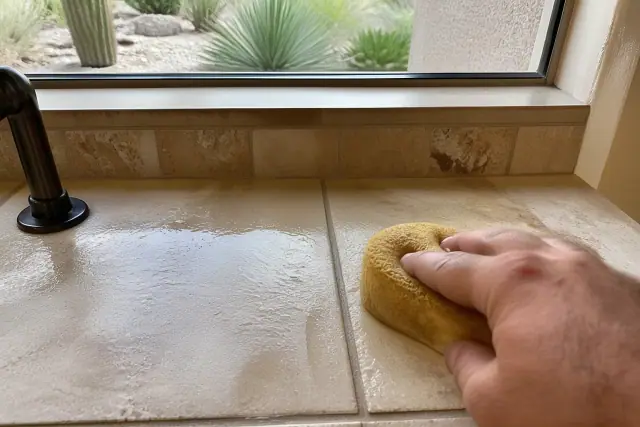
A damp sponge wiping excess mortar from between newly installed stone tiles at a job site in Phoenix, AZ.

Small repairs address isolated cracks or missing joints without stripping the full surface. Phoenix-market spot repairs typically run $175 to $325, with the final scope depending on access, joint condition, and whether nearby tile remains stable.

Request Estimate

Shower Regrouting

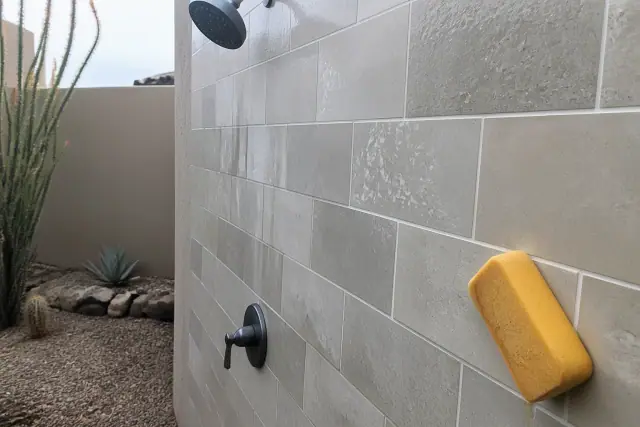
A damp sponge wiping excess grout from stone shower tiles during a repair project in Phoenix, AZ.

A full shower regrout removes failed material, checks the pan and surrounding moisture conditions, and rebuilds clean joints with an application-matched grout. Typical Phoenix shower regrouts range from $450 to $1,650 depending on stall size and whether the pan needs resealing; average shower grout life expectancy is 10 to 15 years before full replacement.

Request Estimate

Whole-Room Regrouting

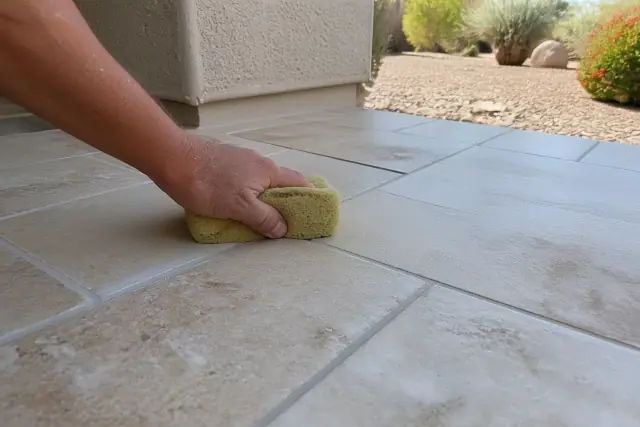
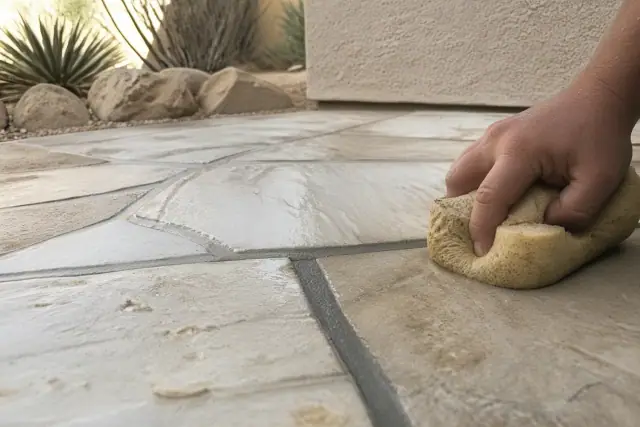
Damp sponge cleaning excess mortar from fresh tile grout lines at a residential jobsite in Phoenix, AZ.

Whole-room work strips the old joint material across a floor before new grout is installed consistently throughout the tile field. These projects are common when original grout reaches the 15 to 20-year mark and typically run $1,800 to $4,200.

Request Estimate

Tile and Grout Cleaning

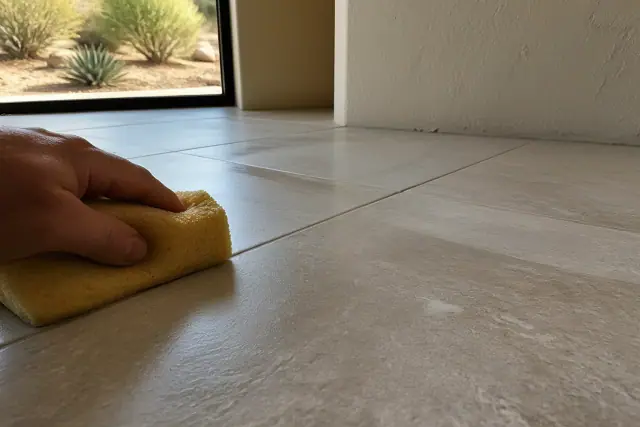
Damp sponge wiping excess grout from new stone tiles at a residential jobsite in Phoenix, AZ.

Cleaning is often the first step when the issue may be mineral haze, soap scum, grease, or surface staining rather than failed joints. Tile and grout cleaning averages $457 in Phoenix, with a typical range of $285 to $645, and helps reveal whether restoration or full regrouting is warranted.

Request Estimate

Bathroom Floor Regrouting

A technician wiping excess mortar from between new stone bathroom tiles during a regrouting project in Phoenix, AZ.

Bathroom floors face splash exposure, foot traffic, and temperature changes, including heated tile in some Phoenix remodels. We evaluate the joint condition and tile bond before replacing worn grout across the floor.

Request Estimate

Vanity and Movement-Joint Repair

A sponge wiping excess mortar from new stone tile grout lines during a bathroom renovation in Phoenix, AZ.

Sink and vanity surrounds collect standing water, toothpaste, and cleaning chemicals that wear on grout. Field joints receive standard grout where appropriate, while movement points receive flexible caulk to reduce recurring corner cracks.

Request Estimate
Grout Material Options

Grout Material & Support Options

Joint width, tile porosity, moisture exposure, and movement determine the appropriate grout and supporting materials. We compare cement-based, epoxy, and urethane options rather than defaulting to one product for every porcelain, stone, or large-format tile application.

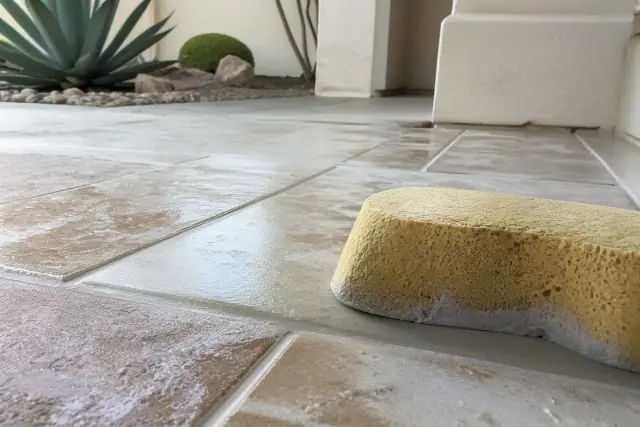
A damp sponge cleaning grout lines between stone tiles on a construction site in Phoenix, AZ.

Sanded Cement Grout

Sanded cement grout is selected only after the joint width and tile surface are measured. In Phoenix's dry air, correct mixing and damp-curing matter because the exposed surface can lose moisture before the material underneath has cured.

  • Measured joint-width selection
  • Cement-based formulation
  • Tile-surface compatibility review
  • Controlled damp-curing
  • Penetrating sealer guidance
Request Estimate
Damp sponge wiping excess unsanded cement grout from stone tile joints at a home in Phoenix, AZ.

Unsanded Cement Grout

Unsanded cement grout is another joint-width and tile-specific option. Tile porosity and surface sensitivity are especially important around natural stone, where the grout and cleaning chemistry must be matched carefully.

  • Joint-width matching
  • Natural-stone surface review
  • Tile porosity evaluation
  • Controlled mixing and application
  • Flexible caulk at movement points
Request Estimate
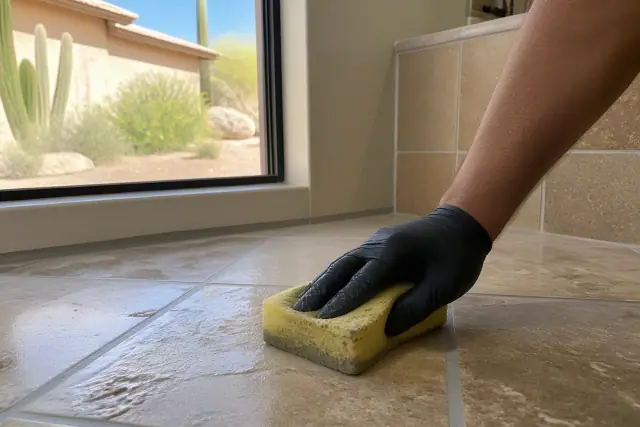
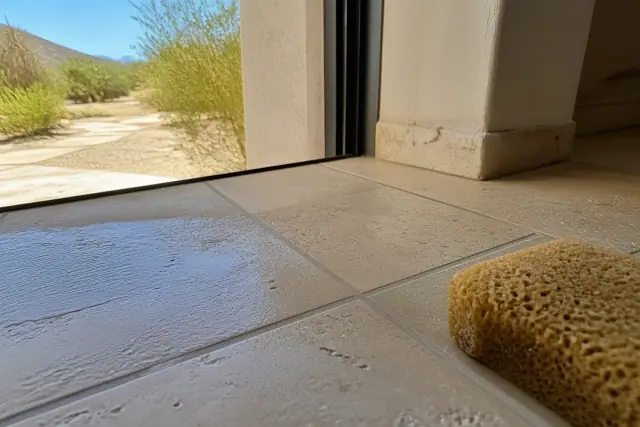
Close-up of new epoxy grout between ceramic tiles in a Phoenix, AZ home with desert views through the window.

Epoxy Grout

Epoxy grout is considered when the tile type, joint dimensions, and moisture exposure support its use. It remains a wear-layer choice, so shower pans and walls still require a proper waterproofing membrane behind the tile.

  • Moisture-exposure evaluation
  • Shower and wet-area review
  • Waterproof membrane inspection
  • Tile and joint compatibility
  • ANSI A118 series product selection
Request Estimate
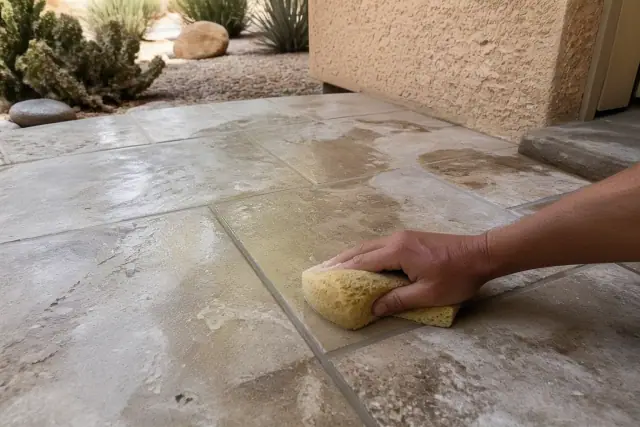
Damp sponge wiping excess grout from between new stone tiles during a residential repair project in Phoenix, AZ.

Urethane Grout

Urethane grout is evaluated as an application-specific option alongside cement and epoxy systems. The decision still depends on tile type, joint width, exposure, traffic, and the condition of the prepared joint.

  • Application-specific matching
  • Residential or commercial use review
  • Moisture and traffic assessment
  • Clean, fully prepared joints
  • Arizona heat cure planning
Request Estimate
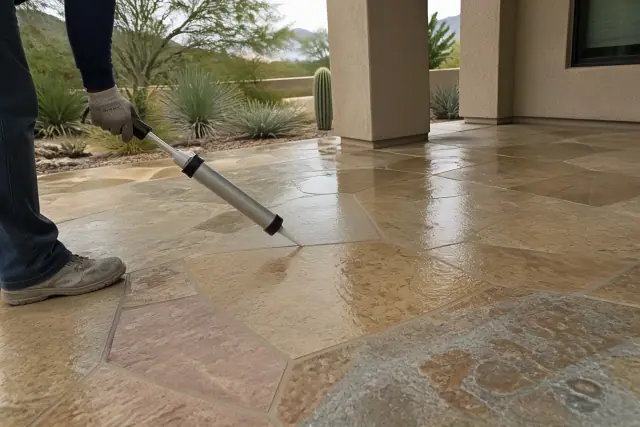
Technician applying sealant to a tiled floor at a job site in Phoenix, AZ, with a stucco home in the background.

Sealants, Caulk, and Membranes

Grout is only one part of a wet-area assembly. Flexible caulk belongs at movement points, penetrating sealer supports routine grout maintenance, and vapor barriers or liquid membranes may be needed behind tile when waterproofing is missing or damaged.

  • Flexible caulk at movement points
  • Penetrating grout sealer
  • Vapor barrier where needed
  • Liquid membrane where needed
  • Shower pan and slope evaluation
Request Estimate
Finding Your Right Fit

Choosing the Right Grout Repair Approach

The right approach is the least invasive repair that resolves the actual failure. We distinguish removable staining from deteriorated grout, isolated joint damage from tile movement, and surface moisture from a failed pan or substrate before recommending cleaning, spot repair, full regrouting, or broader tile work.

Inspection-Led Recommendations

We inspect before quoting and explain whether the failure is surface-level or extends beneath the tile. That keeps the scope proportional, whether the solution resembles a $200 spot repair on a Chandler kitchen floor or a full commercial regrout in a Camelback Corridor office lobby.

Clean Mechanical Preparation

Diamond-tipped oscillating tools remove failed material more cleanly than hand scraping while helping protect tile edges. Dustless methods and thorough vacuuming leave an open joint ready for new material and expose hidden backer-board or tile-bond problems.

Standards-Based Tile Work

Our material and installation decisions follow Tile Council of North America methods and use grout systems built to ANSI A118 series standards. The work also complies with Arizona Registrar of Contractors licensing requirements for residential and commercial tile trades.

What Sets Us Apart

Why Choose Phoenix Tile Flooring for Grout Repair?

Phoenix grout failures are shaped by hard water, intense dry heat, monsoon humidity, tile movement, and the original installation. We combine local-condition diagnosis with clean removal, application-matched materials, and controlled curing so the recommendation fits both the surface and the cause.

Request Grout Assessment

Cracked Grout Lines

Dry heat can pull moisture from cement grout too quickly, creating shrinkage and hairline fractures. Expansive clay soils around the East Valley can also flex tile fields, making correct expansion joints and climate-aware mixing important.

Mineral Staining and Efflorescence

Mineral-heavy municipal water can leave gray or yellow staining and chalky white efflorescence in porous or open joints. Cleaning chemistry must match the grout because the wrong product can etch cement grout and make discoloration worse.

Moisture and Mold Risk

Bathrooms with weak ventilation can hold monsoon moisture against tile after the grout seal fails. Water can then reach the mortar bed, support mold in grout lines, and eventually damage the substrate beneath the tile.

Loose or Crumbling Grout

Grout can lose its bond to the tile edge after vibration or an original mix that was too wet. Tapping for hollow tile helps show how far the problem extends, because filling a crumbling gap without full removal rarely holds for more than a season.

Rapid Curing and Shrinkage

Arizona's low humidity can dry the grout surface while the material underneath remains uncured. Damp-curing and avoiding direct afternoon sun on outdoor or patio tile help reduce shrinkage cracks during application.

Failed Movement Joints

Corners and other movement points can crack repeatedly when rigid grout is used where flexible caulk belongs. Movement may also point to loose tile or substrate damage, so the joint and surrounding field need to be checked together.

How it works

Our Grout Repair & Regrouting Process

Every project begins with an honest look at the grout, tile, moisture exposure, and underlying support. The work then moves from scope selection and clean removal to material matching, application, controlled curing, and practical maintenance guidance.

01.

Assess Grout, Tile, and Moisture

We check joint width, grout hardness, tile stability, and moisture readings around shower pans and floor perimeters. Tapping for hollow tile helps distinguish failed grout from a bond or substrate problem.

02.

Choose the Least Invasive Scope

The findings determine whether the surface needs compatible cleaning, an isolated patch, a full regrout, or tile and substrate repair. We explain that scope before demolition begins.

03.

Remove Failed Grout Cleanly

Diamond-tipped oscillating tools and dustless removal methods strip old material without hand-scraping tile edges or spreading dust through the house. The joint is opened fully enough to receive new grout.

04.

Clean and Verify the Substrate

We vacuum the open joints and inspect for cracked backer board or loose tile before applying new material. Skipping that preparation is a common reason DIY regrouts fail within a year.

05.

Match Grout to the Application

Joint width, tile porosity, and moisture exposure guide the choice among sanded, unsanded, epoxy, and urethane grout. Porcelain, natural stone, and large-format tile are evaluated for their actual application rather than treated alike.

06.

Apply, Cure, and Plan Maintenance

Cement grout is damp-cured as needed, and outdoor work is scheduled away from direct peak-afternoon sun. After regrouting, penetrating sealer and simple habits such as squeegeeing shower walls help limit trapped moisture and mildew growth.

Get Better Grout Service

Schedule a Grout
Repair & Regrouting
Assessment

Request an assessment for cracked, stained, loose, or moisture-damaged grout in a Phoenix-area home or commercial property. We will inspect the surface, explain the failure, and recommend the repair scope and grout type that fit the tile and exposure.

Grout Repair Help

Grout Repair & Regrouting FAQs

These answers cover Phoenix grout costs, repair scope, material selection, shower moisture, local failure causes, and ongoing care. A surface inspection is still necessary when loose tile, a failed pan, or substrate damage may be involved.

Call Our Grout Team

Small spot repairs typically run $175 to $325, full shower regrouts range from $450 to $1,650, and whole-room strip-and-regrout projects run $1,800 to $4,200. Stall size, pan resealing, joint condition, and underlying tile or substrate damage can change the scope.

Cleaning may be enough when the joints are sound and the issue is mineral haze, grease, soap scum, or surface staining. Crumbling, missing, debonded, or moisture-compromised joints usually require repair or regrouting after the tile and substrate are checked.

Yes, isolated damage can often be handled as a spot repair when nearby tile is stable and the failure has not spread below the surface. Loose or hollow tile, widespread crumbling, or moisture beneath the assembly can make a broader repair necessary.

Average shower grout life expectancy is 10 to 15 years before full replacement, and it may be shorter when the original installation lacked proper sealing. Water exposure, ventilation, drainage, cleaning products, and the condition of the waterproofing assembly also matter.

Phoenix's dry heat can pull moisture from cement grout too quickly, while monsoon humidity adds seasonal movement. Expansive clay soils in the East Valley, missing expansion joints, vibration, and an overly wet original grout mix can also contribute.

Chalky white deposits are often efflorescence, which appears when water reaches the mortar bed and carries minerals back through the joint. Mineral-heavy municipal water can also contribute to haze and staining, so the cleaner must match the grout chemistry.

Joint width, tile porosity, moisture exposure, and tile type guide the choice among sanded, unsanded, epoxy, and urethane grout. Porcelain, natural stone, and large-format tile can require different specifications, so the material should be matched to the actual application.

No. Grout is a wear layer, not a complete waterproofing system, so a shower still needs the appropriate membrane, vapor barrier, pan, and drainage behind or beneath the tile where required.

It can when the tile and substrate remain stable and the failure is limited to the joints. Regrouting restores the grout field without tearing out sound tile, but loose tile, pan failure, or damaged backer board may require tile repair or replacement.

Whole-room regrouting becomes common when original grout reaches the 15 to 20-year mark, especially when deterioration is widespread. Age alone does not decide the scope; joint hardness, tile stability, moisture, and how consistently the grout is failing should be checked first.

Diamond-tipped oscillating tools remove failed grout with more control than hand scraping, helping protect tile edges. Dustless methods and vacuuming keep the joint clean while exposing loose tile or cracked backer board before new material is placed.

Start by correcting trapped-moisture causes such as poor slope, a failed pan liner, or weak ventilation. A penetrating sealer and squeegeeing shower walls after use can then help limit the moisture that supports mildew growth.

Phoenix Tile Flooring provides grout repair and regrouting throughout Phoenix and the surrounding metro area. The stated service area includes Scottsdale, Tempe, Mesa, Chandler, Glendale, and Peoria.