Proudly serving Phoenix, Scottsdale, Mesa, Chandler, Glendale, Gilbert & surrounding areasCall or Text 24/7: 602-449-9183
Aerial view of suburban homes, desert vegetation, and distant mountains in Phoenix, AZ.

Outdoor and Patio Tile Installation for Pool Decks and Entrances in Phoenix, AZ

Phoenix Tile Flooring installs outdoor and patio tile for homes and businesses in Phoenix, Arizona. Our exterior work includes backyard patios, pool decks, covered patios, outdoor fireplaces, entryways, courtyards, and dining areas. We work with porcelain, travertine, saltillo, and other natural stone suited to exterior use. Outdoor and patio installation is one of ten specialized tile services we perform across the Valley.

Exposed Phoenix patio slabs can climb past 140 degrees, while monsoon runoff quickly reveals weak drainage and setting work. Our licensed, insured crews inspect the substrate, slope, sun exposure, and moisture conditions before recommending materials. We follow TCNA handbook details, NTCA best practices, ANSI A108 setting methods, and ANSI A118.10 waterproofing guidance where moisture control matters. That preparation helps exterior tile handle demanding heat, water, and daily use.

From residential patios and pool surrounds to HOA courtyards, restaurant dining areas, and office-park walkways, we plan each installation around how the space will be used and exposed.

Phoenix Tile Flooring provides outdoor and patio tile installation throughout Phoenix and nearby Scottsdale, Tempe, Mesa, Chandler, and Glendale.

★ ★ ★ ★ ★4.9/5.0 Customer Rating · 26 Years of Tile & Flooring Experience · Thousands of Projects Completed · Licensed, Bonded & Insured · Serving Homeowners & Businesses

Outdoor Patio Tile Options & Benefits

What Is Outdoor Patio Tile Installation?

Outdoor patio tile installation turns an exterior concrete slab into a finished surface designed for sun, rain, foot traffic, and the way the space is used. The work may cover a backyard patio, pool surround, covered seating area, courtyard, entryway, or outdoor fireplace feature.

A durable assembly begins below the visible tile. Surface grinding, concrete repair, crack isolation, slope correction, exterior-rated mortar, movement joints, suitable grout, and sealing all help the finish perform through dry heat and sudden monsoon water.

Material and layout choices are matched to exposure and use, from exterior-rated porcelain and large-format planks to travertine, limestone, saltillo, mosaics, and geometric patterns. Wet areas, commercial spaces, and high-heat features each require a different balance of absorption, slip resistance, joint design, and maintenance.

Benefits of Exterior-Rated Patio Tile

The right tile assembly provides a finished outdoor surface that is easier to care for and better prepared for Phoenix exposure. Material selection and installation details work together to support appearance, safety, and long-term performance.

  • Exterior-rated porcelain can last 20 to 30 years with proper care and sealing.
  • UV-resistant surfaces help limit fading and degradation under intense sun.
  • Low-absorption tile choices support patios, pool decks, and splash-prone areas.
  • Slip-rated finishes improve footing where wet bare feet are common.
  • Correct slope and waterproofing details help direct monsoon runoff away from the home.
  • Movement joints and flexible grout choices accommodate thermal expansion and contraction.
  • Penetrating sealers help natural stone resist staining, efflorescence, and water absorption.
  • Patterns, colors, tile sizes, and feature accents can complement both traditional and contemporary homes.
Exterior Tile Services

Outdoor & Patio Tile Services

We install and replace exterior tile across residential and commercial settings. Each service starts with the slab, drainage, exposure, traffic, and finish requirements rather than treating every patio as the same surface.

Residential Backyard Patios

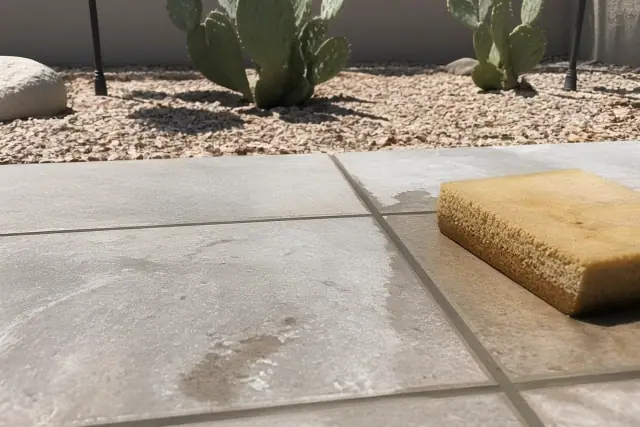
Damp sponge cleaning mortar from new stone tile patio gaps in a residential backyard in Phoenix, AZ.

We plan backyard patio tile around the slab's age and condition, sun exposure, roof runoff, furniture zones, and the home's architecture. A slab poured in 1998 in Ahwatukee, for example, may require a different repair and isolation plan than a new build in Desert Ridge.

Request Estimate

Pool Deck Tile Installation

A sponge wiping excess mortar from newly installed stone pool deck tiles in Phoenix, AZ.

Pool surrounds face standing water, sunscreen chemicals, chlorinated splash, bare feet, and steady traffic. We specify low-absorption porcelain or natural stone suited to wet exterior use and select tile with a slip rating of R11 or higher for consistently wet surfaces.

Request Estimate

Covered Patio Tile Installation

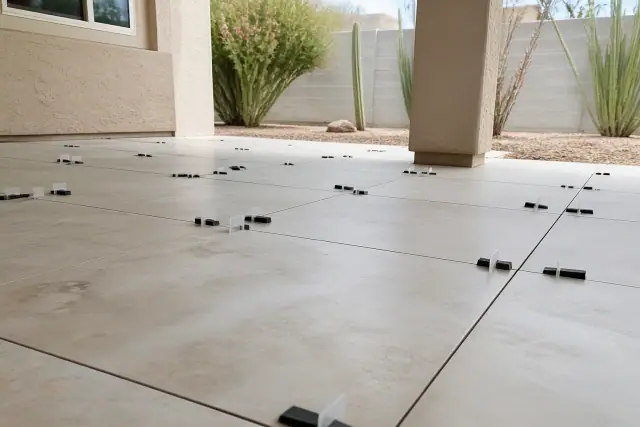
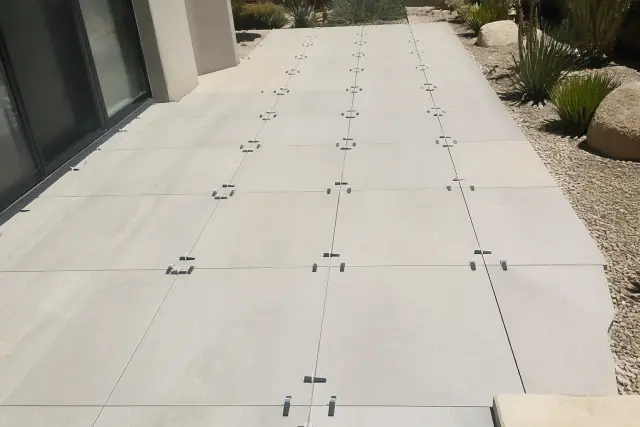
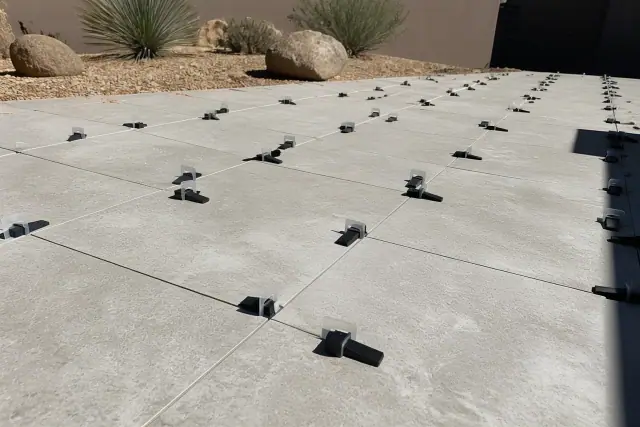
Plastic leveling clips and wedges installed between patio tiles on a jobsite in Phoenix, AZ.

Covered patios receive less direct UV exposure, but concentrated roofline runoff can make their edges vulnerable. We coordinate slope and expansion-joint placement so covered and uncovered zones drain and move consistently.

Request Estimate

Outdoor Fireplaces & Tile Features

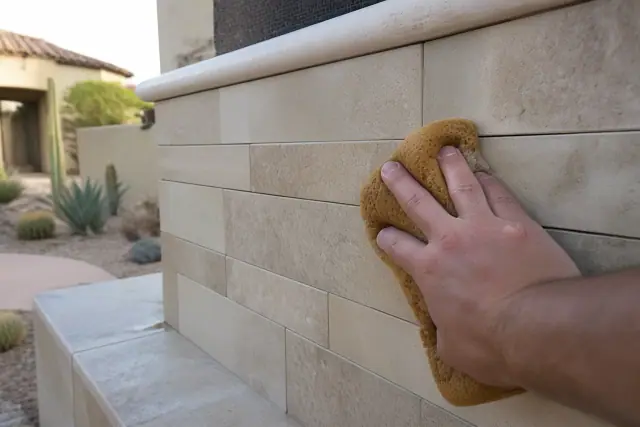
A sponge cleaning mortar from stone tile gaps on an outdoor fireplace at a residential project in Phoenix, AZ.

Outdoor fireplaces require heat-resistant tile that can handle repeated heating without cracking or discoloring. We install rated natural stone or porcelain and detail the grout joints for the expansion cycle, with mosaic or feature-wall accents available around kitchens and seating areas.

Request Estimate

Commercial Patios & Courtyards

Plastic leveling clips and tiles installed on a patio in Phoenix, AZ, with desert landscaping nearby.

Restaurants, HOAs, and office parks need outdoor tile suited to traffic, wet conditions, and ADA-compliant slip resistance. We install patios, courtyards, and dining surfaces and schedule the work around business hours to limit disruption.

Request Estimate

Patio Retiling & Dustless Removal

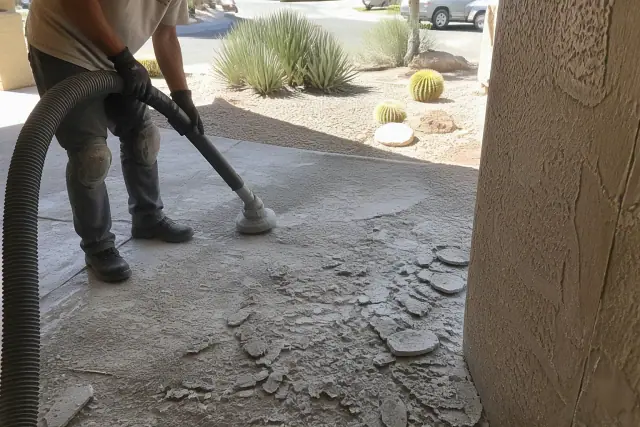
Industrial vacuum hose removing old patio tiles from a xeriscaped yard at a job site in Phoenix, AZ.

For an existing patio, dustless tile removal controls debris while exposing old thinset and the concrete below. Once the surface is clear, we can identify cracks, spalling, moisture concerns, or slope problems before rebuilding the tile assembly.

Request Estimate
Materials & Layouts

Outdoor Patio Tile Materials & Designs

Tile material, size, finish, joint layout, and pattern all affect an exterior surface's heat response, water performance, maintenance, and appearance. We compare those factors against the slab and use of the space before finalizing the installation plan.

Exterior porcelain tile installation on a residential patio in Phoenix, AZ, showing tiles with mortar haze.

Exterior Porcelain Tile

Porcelain rated for exterior use combines low water absorption with resistance to UV fading and surface degradation. It works across patios, pool decks, and high-traffic outdoor areas when its finish is matched to heat and slip needs.

  • Specify porcelain manufactured for exterior exposure.
  • Compare water absorption for splash-prone areas.
  • Choose UV-resistant finishes for uncovered patios.
  • Match slip performance to wet traffic zones.
  • Coordinate tile size with drainage and joint layout.
Request Estimate
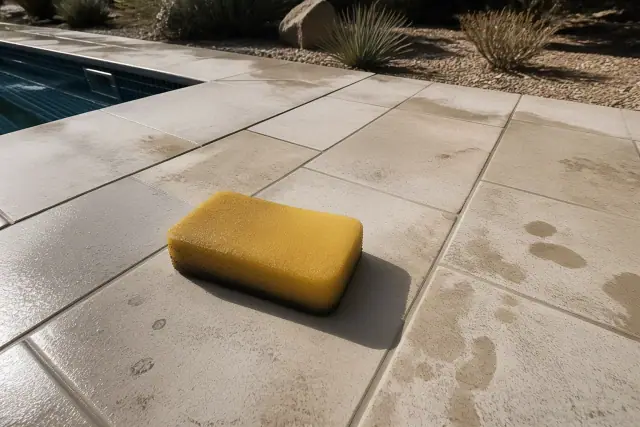
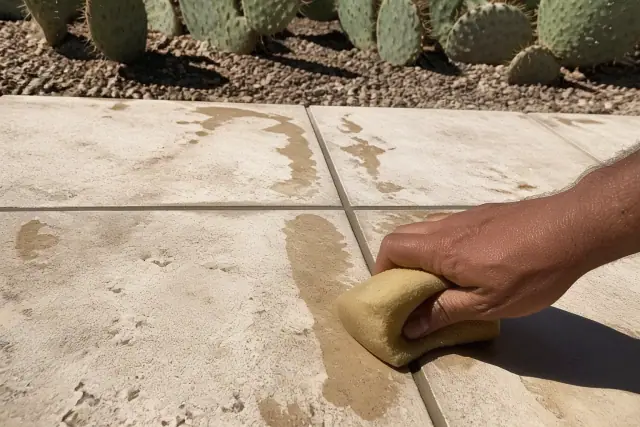
Damp sponge wiping excess mortar from newly installed travertine patio tiles in Phoenix, AZ.

Travertine & Natural Stone

Travertine, slate, limestone, granite, and marble offer organic color and texture for outdoor spaces. Because natural stone can absorb water, the installation includes a compatible penetrating sealer and a maintenance plan suited to the exposure.

  • Select stone suited to exterior wear and heat.
  • Use penetrating sealer to limit water absorption.
  • Plan for staining and efflorescence exposure.
  • Choose texture for wet-area footing.
  • Coordinate grout color with the natural variation.
Request Estimate
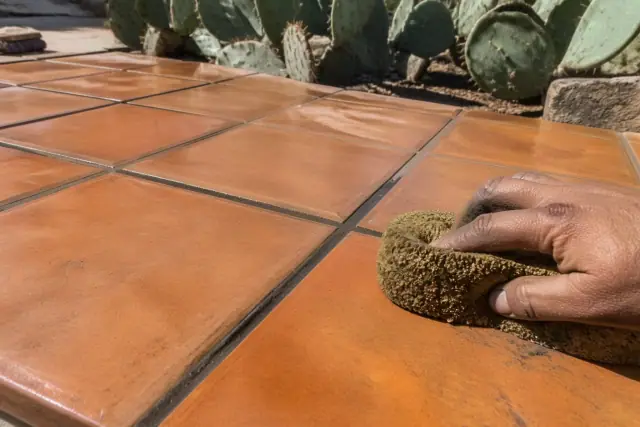
A sponge wiping mortar from between newly installed Saltillo patio tiles at a jobsite in Phoenix, AZ.

Saltillo Patio Tile

Saltillo is an option for patios where its warm, traditional appearance fits the home's architecture. We evaluate the slab, sun and water exposure, joint layout, and sealing needs before recommending it for a specific outdoor area.

  • Review sun exposure at the planned location.
  • Account for roof runoff and monsoon water.
  • Plan grout joints for exterior movement.
  • Match the sealer to the material and use.
  • Coordinate color and layout with the home.
Request Estimate
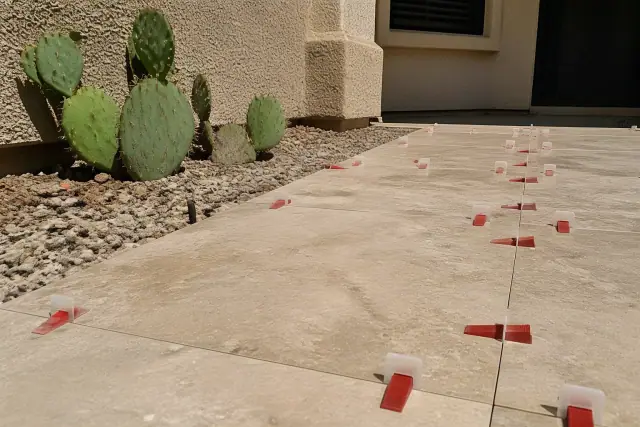
Plastic leveling clips and wedges installed between large outdoor tiles on a patio project in Phoenix, AZ.

Large-Format Outdoor Tile

Large-format tile and oversized planks create a clean look with fewer grout lines, but they place greater demands on flatness, layout, cutting, and mortar coverage. We use large-format tile mortar systems and account for added cutting time in the quote.

  • Fewer grout lines create a cleaner visual field.
  • Flatness is checked before setting begins.
  • LFT mortar supports oversized tile coverage.
  • Dry layouts reveal cuts and alignment early.
  • Drainage and movement joints remain part of the layout.
Request Estimate
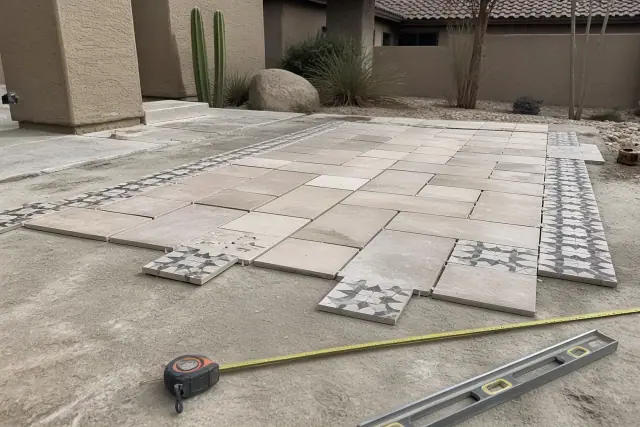
Tiles laid out on a patio in Phoenix, AZ, to verify patterns and spacing during a residential installation.

Custom Patterns & Accents

Pattern changes how an outdoor area feels and how much cutting the installation requires. We dry-lay the design for approval before mortar goes down and account for pattern complexity in the itemized quote.

  • Running bond for a straightforward repeating layout.
  • Herringbone patterns for directional movement.
  • Diagonal layouts with additional perimeter cuts.
  • Geometric patterns planned before setting.
  • Mosaic accents for kitchens, fireplaces, and seating areas.
Request Estimate
Finding Your Right Fit

Choosing the Right Outdoor Tile Approach

A suitable patio tile plan balances surface condition, drainage, direct sun, wet traffic, maintenance, pattern complexity, and the architecture around the space. Our recommendations connect those conditions to the material and installation details that matter outdoors.

Phoenix Climate Planning

A 115-degree summer afternoon and a cool winter night can put the tile and grout through a wide thermal swing. We also account for UV exposure and concentrated monsoon runoff when selecting tile, locating joints, setting slope, and choosing grout and sealer.

Standards-Based Installation

Our crews use exterior details from the TCNA handbook, NTCA practices for substrate preparation and movement joints, ANSI A108-compliant setting methods, and ANSI A118.10 membranes where waterproofing is needed. These references guide the assembly beneath the finished surface.

Licensed, Insured Workmanship

Phoenix Tile Flooring is licensed through the Arizona Registrar of Contractors and carries insurance. We explain the project scope, substrate preparation, material plan, and installation sequence before starting, then review the completed surface and care needs with the client.

What Sets the Work Apart

Why Professional Patio Tile Installation Matters

Exterior tile failures usually begin with the slab, slope, mortar, joints, or material choice rather than the visible pattern. Correct preparation can make one professional installation outlast two or three DIY attempts while avoiding repeated removal and replacement.

Request a Patio Estimate

Poor Drainage and Slope

An outdoor slab needs a minimum quarter-inch-per-foot slope away from the home. We verify slope with a level and correct drainage problems before tile installation so monsoon water does not collect against the structure or remain on the surface.

Heat and UV Stress

Interior finishes can craze, fade, or discolor after repeated exterior heat and sun exposure. Exterior-rated tile, suitable mortar, movement accommodation, and UV-conscious grout and sealer choices help the surface withstand the desert cycle.

Interior-Rated Materials Outdoors

Interior-rated thinset or tile is not designed for the same exposure as an exterior patio assembly. The wrong products can contribute to cracked grout and tiles popping loose within a year or two, especially when water and temperature movement reach the setting bed.

Cracked or Spalled Concrete

Cracks, spalled concrete, moisture, and surface contamination can weaken the bond beneath new tile. We expose and test the slab, repair suitable areas, grind the surface as needed, and add crack-isolation treatment before setting begins.

Missing Movement Joints

Grout joints that are too narrow and layouts without movement accommodation have little room for thermal change. The result can be lippage, crooked alignment, cracked grout, or stress transferred into the tile field.

Water, Stains, and Grout Failure

Pool chemicals, outdoor cooking, runoff, and standing water can stain or weaken an unsuitable finish. Sanded, epoxy, or urethane grout and the appropriate sealer are selected according to joint width, stain exposure, flexibility, and the material being installed.

How It Works

Our Outdoor Patio Tile Process

The process moves from inspection and design through demolition, substrate correction, setting, grouting, and sealing. We explain what the slab and layout require before work begins and keep the sequence clear through final review.

01.

Inspect the Site and Slab

We walk the space, discuss how it is used, and assess sun, wet traffic, roof runoff, existing damage, moisture, and slope. This in-person check identifies preparation and drainage needs before material decisions are finalized.

02.

Select Material and Layout

We compare porcelain, natural stone, saltillo, tile size, slip performance, color, and pattern against the site's conditions. The pattern is dry-laid for approval, and the itemized quote accounts for tile grade, area, substrate work, and cutting complexity.

03.

Remove and Prepare

When existing tile is present, dustless removal clears the old finish and setting material while controlling debris. We then grind, clean, patch, and repair suitable areas so the new system has a properly prepared concrete surface.

04.

Correct Slope and Isolate Cracks

Slope issues are corrected before setting, and crack-suppression or waterproofing membranes are installed where the substrate and moisture exposure require them. These layers protect the tile assembly from weaknesses that are easy to miss once the finish is in place.

05.

Set and Align the Tile

Tile is set with an exterior-rated mortar system suited to its format, with deliberate coverage, alignment, joint width, and movement-joint placement. Diagonal, geometric, herringbone, and large-format layouts receive the extra cutting and checking their patterns require.

06.

Grout, Seal, and Review

We apply the selected sanded, epoxy, or urethane grout, then seal the surface according to the tile and exposure. The final review covers drainage, appearance, grout and sealant details, and care for the finished outdoor surface.

Plan Your Outdoor Surface

Schedule an Outdoor Patio Tile
Consultation

Tell us about your patio, pool deck, courtyard, covered area, or outdoor feature. We will inspect the surface, discuss exterior-rated materials and patterns, and prepare an itemized estimate based on the actual installation conditions.

Outdoor Tile Help

Outdoor Patio Tile FAQs

Review common questions about Phoenix patio tile pricing, materials, concrete preparation, layouts, timing, wet-area safety, and exterior maintenance.

Call Our Tile Team

Phoenix-area patio tile installations typically range from about $1,935 to $3,872 for materials and labor, while broader patio projects average around $2,745 and range from $1,439 to $4,052 depending on size and finish. Ceramic tile installation across Arizona runs roughly $6.30 to $8.03 per square foot including labor, with porcelain and natural stone generally higher because of material and cutting time. Larger citywide tile projects average $8,868 to $10,767 when the scope includes more square footage or premium natural stone. Tile grade, patio size, slab condition, and pattern complexity all affect an itemized quote.

Exterior-rated porcelain is generally the strongest choice for Phoenix patios because it resists UV fading and absorbs very little water. Travertine, slate, and limestone can also perform well when properly sealed and matched to the use of the space. Interior-rated ceramic should be avoided on exterior slab-on-grade installations.

The 3/4/5 rule is a squaring method used before setting tile. Measure three feet along one layout line and four feet along the perpendicular line; when the diagonal between those points is exactly five feet, the corner is square. This prevents alignment errors from accumulating across a large patio.

Yes, when the concrete is structurally sound, properly sloped, and free of major cracking or spalling. The slab should be checked for moisture and damage, with cracks isolated and repairs completed before tile is set. Skipping that evaluation is a common cause of early patio tile failure.

A standard residential patio between 300 and 400 square feet typically takes three to five working days from removal through final sealing. Larger backyard projects, pool decks, or installations needing substantial concrete and drainage work can take one to two weeks. Active rain events during monsoon season can also affect scheduling.

Yes. Dustless removal controls airborne debris during demolition, which is useful around occupied homes, living spaces, and pool equipment. Clearing the old tile and thinset also gives the crew a better view of the slab before repairs and preparation begin.

Sanded grout is commonly used for wider outdoor joints with a suitable sealer. Epoxy or urethane grout can be appropriate where stain, chemical, or flexibility demands are greater, such as pool decks and outdoor kitchens. The joint width and grout type should also accommodate Phoenix's day-to-night temperature changes.

We install outdoor and patio tile in Phoenix, Scottsdale, Tempe, Mesa, Chandler, and Glendale. Phoenix projects include neighborhoods such as Arcadia, Ahwatukee, Paradise Valley, Laveen, and Desert Ridge, with residential and commercial work across Maricopa County.

Pool-deck tile should have low water absorption and slip performance suited to wet, high-traffic use. The setting bed also needs careful preparation because standing water can accelerate weaknesses beneath the tile. Sunscreen chemicals and chlorinated splash should be considered when choosing grout and sealer.

Yes. Commercial work includes patios, courtyards, and outdoor dining areas for restaurants, HOAs, and office parks. These projects account for traffic, wet-area slip resistance, ADA needs, and scheduling around business hours.

We inspect the existing slope, roofline runoff, low spots, and transitions before tile selection is finalized. Drainage correction and waterproofing details are planned before setting so sudden monsoon water moves away from the home instead of collecting on the patio. Covered and uncovered zones are coordinated because they can receive water differently.

Outdoor fireplace tile should be rated for high-heat zones and direct-flame proximity. Natural stone or exterior porcelain can be used when the selected product is appropriate for the exposure. Grout joints are detailed to handle the repeated expansion cycle created by fireplace use.

Options include running bond, herringbone, diagonal, and geometric layouts, along with mosaic accents and feature-wall tile. We dry-lay the pattern before setting so the alignment and perimeter cuts can be reviewed. More complex patterns require additional cutting time, which is included in the quote planning.