Proudly serving Phoenix, Scottsdale, Mesa, Chandler, Glendale, Gilbert & surrounding areasCall or Text 24/7: 602-449-9183
Aerial view of suburban homes, desert vegetation, and distant mountains in Phoenix, AZ.

Tile Repair and Replacement for Damaged Floors and Walls in Phoenix, AZ

Phoenix Tile Flooring repairs and replaces damaged tile for homes and businesses in Phoenix, AZ. Our services cover cracked and broken tile, grout repair and regrouting, shower and bathroom tile, kitchen backsplashes, dustless removal, and full replacement where the substrate has failed. We work with porcelain, ceramic, travertine, slate, limestone, and other natural stone surfaces. Each project starts with finding the cause so the repair fits the tile, setting bed, and room.

Phoenix tile floors and walls face movement from expansive caliche and clay soils beneath slab-on-grade construction. Seasonal slab movement, monsoon moisture, and summer surface temperatures that regularly exceed 110 degrees can crack tile, weaken grout, and lift edges. Outdoor UV exposure can leave grout joints porous within two to three years instead of five. We inspect the damage, grout joints, and substrate before recommending a repair or replacement.

Our crews use dustless removal equipment, ANSI A118-rated thinset, and modified mortars matched to the substrate and tile type. As a licensed Arizona contractor, we follow Tile Council of North America methods and obtain City of Phoenix permits when a project requires them.

Phoenix Tile Flooring provides tile repair and replacement throughout Phoenix and the surrounding Valley, including Scottsdale, Tempe, Mesa, Chandler, and Glendale.

★ ★ ★ ★ ★4.9/5.0 Customer Rating · 26 Years of Tile & Flooring Experience · Thousands of Projects Completed · Licensed, Bonded & Insured · Serving Homeowners & Businesses

Tile Repair or Replacement Starts with the Right Diagnosis

What Does Tile Repair & Replacement Cover?

Tile repair and replacement can include isolated chip and crack fixes, broken-tile removal, grout restoration, substrate correction, and reinstallation when failure extends below the surface. The right scope depends on whether the damage is cosmetic, structural, or a symptom of moisture or bond failure.

Minor chips and hairline cracks can often be patched with color-matched epoxy or resin filler. Local repairs for minor damage typically run from $170 to $280, depending on tile type, access, and finish matching.

Full replacement is more appropriate when the substrate is compromised, several tiles sound hollow, or water has reached the underlayment. Removing the failed area and rebuilding the setting surface helps prevent another failure within the same season.

Benefits of Professional Tile Repair & Replacement

A careful repair protects the surrounding installation while addressing the condition that caused the visible damage. Our approach balances repair-first options with full replacement when the tile bed or substrate can no longer support a durable fix.

  • Diagnoses slab movement, moisture, and bond failure before work begins
  • Preserves surrounding tile when a single-tile repair is practical
  • Contains silica dust with vacuum-shrouded removal equipment
  • Levels uneven substrate areas before replacement tile is set
  • Matches existing grout color, joint width, and lippage where possible
  • Uses setting materials suited to the substrate and tile type
  • Adds waterproof membrane systems behind new shower tile
  • Seals grout joints after kitchen and wet-area installation
Phoenix Tile Services

Tile Repair & Replacement Services

From a chipped entry tile to a failed shower wall or full bathroom floor, we tailor the work to the damage, material, and substrate. These services address the most common repair and replacement needs found in Phoenix homes and commercial spaces.

Cracked & Broken Tile Repair

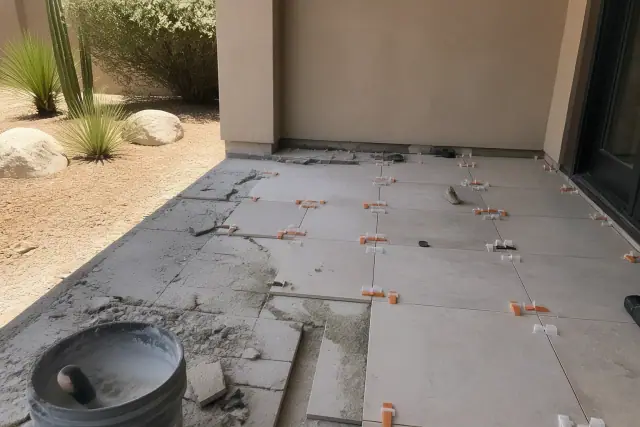
Technician repairing cracked floor tiles with leveling clips and mortar at a job site in Phoenix, AZ.

We repair isolated chips and hairline cracks with material-appropriate epoxy or resin when the tile remains sound. Broken tiles can often be removed one at a time, followed by substrate inspection, a matched replacement, and grout blended to the existing joint.

Request Estimate

Grout Repair & Regrouting

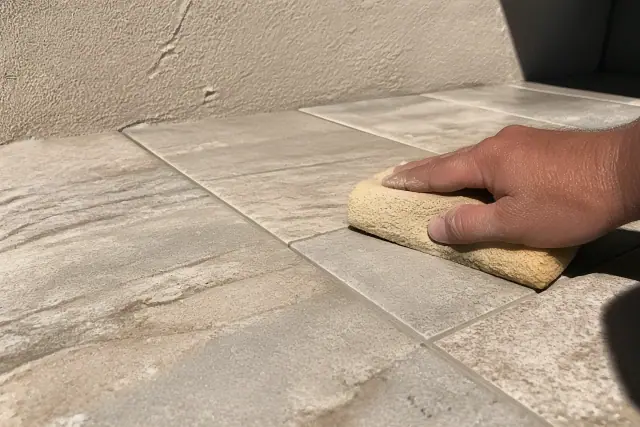
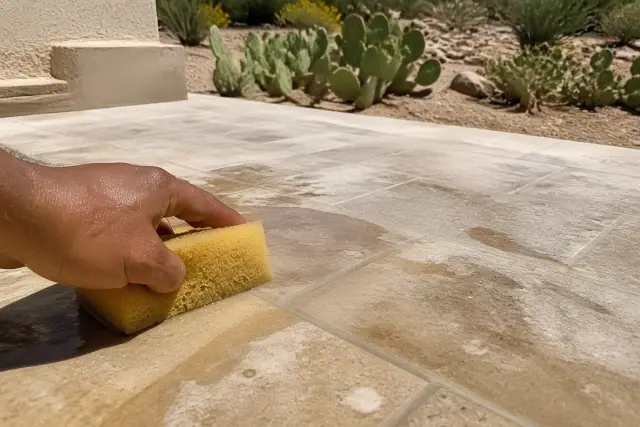
A sponge wiping grout from new stone tile gaps on a jobsite in Phoenix, AZ.

Cracked, porous, or worn grout can admit moisture and loosen adjacent tile. We repair damaged joints or regrout larger areas, using epoxy grout in wet settings and sanded or unsanded products matched to joint width and application.

Request Estimate

Dustless Tile Removal & Substrate Preparation

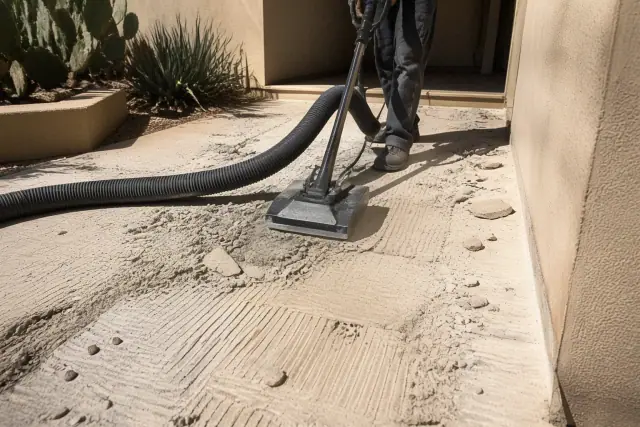
Industrial vacuum removing old tile debris from a concrete floor at a job site in Phoenix, AZ.

Vacuum-shrouded grinders and saws contain silica dust during tear-out, helping protect occupied rooms, HVAC systems, and active commercial spaces. After removal, we inspect for cracks, moisture, and deteriorated mortar, then level uneven areas before setting new tile.

Request Estimate

Shower & Bathroom Tile Repair

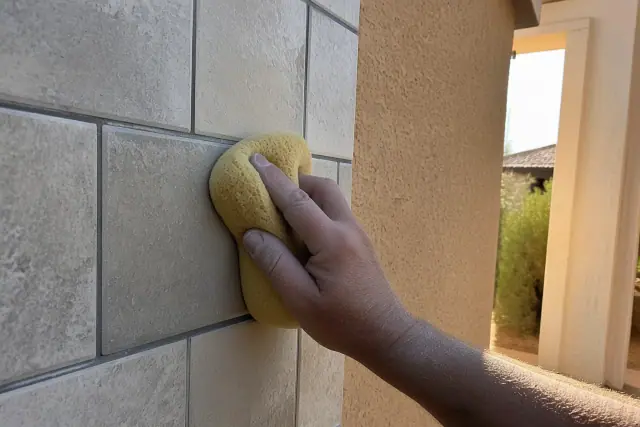
Technician using a sponge to clean mortar from new tile grout lines at a residential bathroom repair in Phoenix, AZ.

We address loose floor tile, worn doorway grout, leaking shower assemblies, and failed wall tile. New shower work includes a waterproof membrane behind the tile, while wet-area grout and slip-resistant surface choices are matched to the room conditions.

Request Estimate

Kitchen Backsplash & Floor Tile

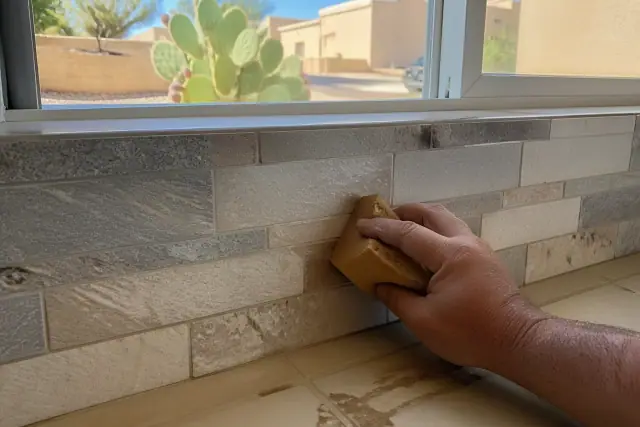
A contractor wipes grout from new stone tile backsplashes and floors at a home in Phoenix, AZ.

Kitchen tile must withstand grease, heat, staining, and daily cleaning. We install and repair ceramic, porcelain, natural stone, mosaic, decorative accent, and large-format backsplash tile while coordinating flooring and backsplash materials when both are part of the project.

Request Estimate

Natural Stone & Specialty Tile

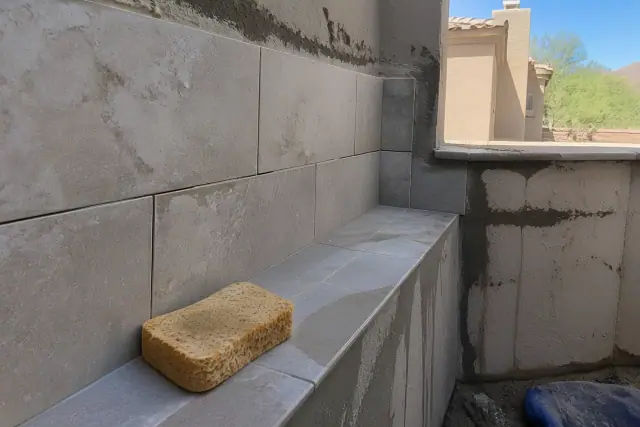
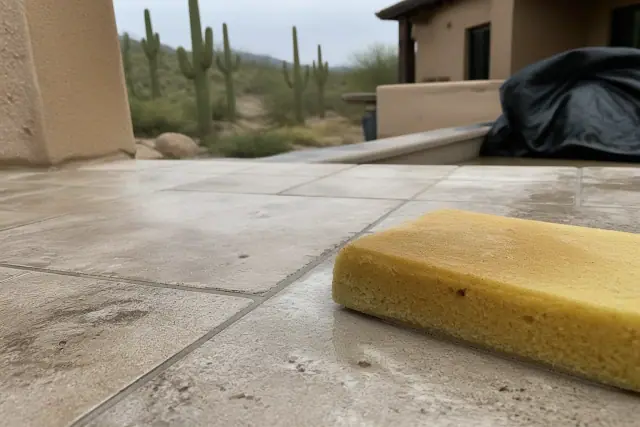
Damp sponge wiping excess mortar from between newly installed stone tiles at a job site in Phoenix, AZ.

Marble, granite, travertine, slate, and limestone each need setting and sealing methods suited to their density and porosity. We also handle large-format, outdoor patio, and commercial tile where sun exposure, traffic, and work-area dust control shape the installation plan.

Request Estimate
Materials & Settings

Tile Materials & Applications

Material selection should reflect moisture exposure, foot traffic, sunlight, cleaning needs, and the condition of the setting surface. We install and repair manufactured tile, natural stone, wet-area assemblies, kitchen surfaces, outdoor patios, and commercial floors with methods suited to each application.

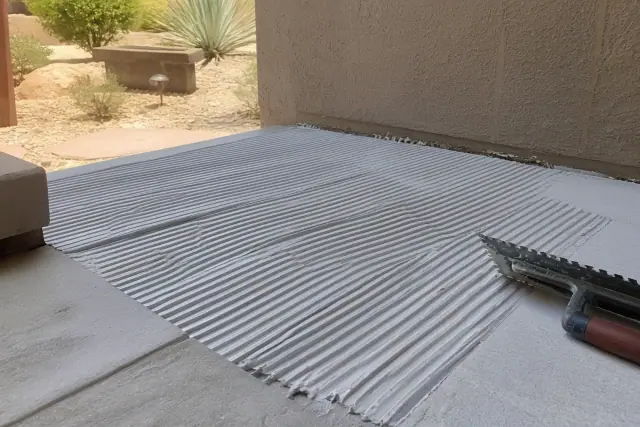
Trowel spreading thinset adhesive on a substrate for tile repair at a jobsite in Phoenix, AZ.

Porcelain & Ceramic Tile

Porcelain is a frequent choice for Phoenix kitchens because it resists staining, scratching, and cooktop heat better than ceramic. Ceramic remains a versatile option for backsplashes, walls, and decorative accents where design range matters.

  • Porcelain surfaces for stain-, scratch-, and heat-prone kitchens
  • Ceramic tile for walls, backsplashes, and decorative layouts
  • Textured porcelain for better traction in wet settings
  • Large-format pieces for fewer grout lines and easier upkeep
  • ANSI A118-rated thinset matched to tile and substrate
Request Estimate
A damp sponge wiping grout from newly installed stone shower tiles at a residence in Phoenix, AZ.

Shower & Bathroom Tile Assemblies

Wet-area durability depends on the assembly behind the finished tile. We combine waterproof membranes, moisture-resistant grout choices, and floor tile with traction suited to shower and bathroom conditions.

  • Waterproof membranes behind new shower tile
  • Epoxy grout for stronger stain and moisture resistance
  • Wet-area traction selected using ANSI A326.3 testing
  • Sanded grout for joints over an eighth of an inch
  • Targeted repairs at doorways, sinks, tubs, and vanities
Request Estimate
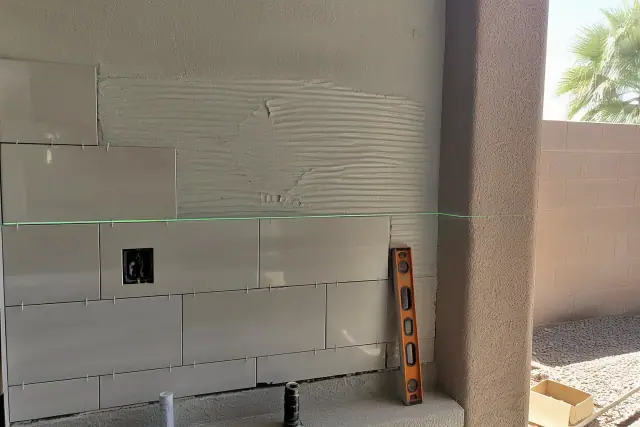
Laser level beam on a kitchen backsplash tile repair project in a Phoenix, AZ home.

Kitchen Backsplash & Large-Format Tile

Backsplashes and kitchen floors need surfaces that tolerate grease, heat, moisture, and frequent cleaning. Thoughtful material and grout choices reduce upkeep while coordinating the backsplash with the flooring.

  • Ceramic, porcelain, natural stone, and mosaic layouts
  • Hand-painted and decorative accent tile for custom designs
  • Large-format tile for fewer joints and a cleaner visual line
  • Grout sealing before oil and food stains set in within weeks
  • Recommended resealing every 12 to 18 months in active kitchens
Request Estimate
Damp sponge wiping excess mortar from new natural stone tile grout lines at a jobsite in Phoenix, AZ.

Natural Stone Tile

Natural stone has distinctive color and movement, but its porosity and density require material-specific mortars, sealers, and maintenance. A one-size-fits-all thinset can contribute to stone tile failure.

  • Marble sealed after installation and resealed annually
  • Penetrating sealer to limit hard-water etching and staining
  • Granite for strong scratch and heat resistance
  • Travertine, slate, and limestone set for their density and porosity
  • Finish and maintenance guidance matched to the selected stone
Request Estimate
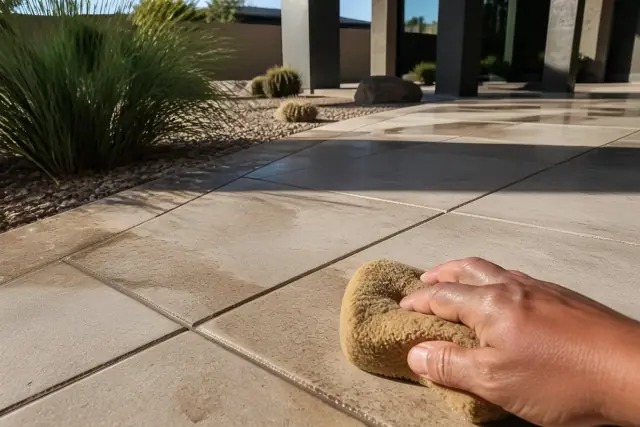
A contractor wiping mortar from new stone tile grout lines on a residential patio in Phoenix, AZ.

Outdoor Patio & Commercial Tile

Outdoor and commercial surfaces face intense sun, temperature cycling, and concentrated foot traffic. Installation planning accounts for exposure, substrate movement, occupied work areas, and the setting material required by the chosen tile.

  • Outdoor joints planned for strong heat and UV exposure
  • Granite and compatible materials for sun-exposed patios
  • Commercial tile installation for active business spaces
  • Dustless tear-out that limits debris near HVAC systems
  • Substrate preparation before replacement tile is installed
Request Estimate
Finding the Right Fit

Choosing Tile Repair or Replacement

An isolated chip or hairline crack may be a good candidate for color-matched filler, while a sound substrate can make single-tile replacement practical. Multiple hollow tiles, water at the underlayment, or a compromised substrate point toward removal and reinstallation. If the original tile is discontinued or the dye lot has changed, a planned border, accent, or partial-section replacement can look more intentional than a near match.

Standards-Guided Tile Setting

We use methods outlined in the Tile Council of North America Handbook and set tile with ANSI A118-rated thinset or modified mortar selected for the substrate and material. Replacement tile is aligned to applicable ANSI A137.1 lippage tolerances.

Substrate Diagnosis & Dustless Removal

Moisture meters, grout-joint checks, and hollow-sound testing help locate failure below the surface. When removal is needed, vacuum-shrouded grinders and saws contain silica dust before the substrate is repaired and leveled.

Licensed, Permit-Aware Work

Phoenix Tile Flooring is a licensed Arizona contractor and obtains permits through the City of Phoenix Development Services Department when a project requires them. We also match tile patterns, grout color, and joint width whenever the available materials allow it.

What Sets Us Apart

Why Choose Phoenix Tile Flooring for Tile Work?

Phoenix conditions make substrate evaluation and material matching as important as the visible repair. We pair moisture checks, dust-controlled removal, and material-appropriate setting methods with repair-first recommendations when an isolated fix is practical. When a larger replacement is needed, we explain the substrate work and matching options before installation begins.

Request Assessment

Cracks from Slab Movement

Expansive caliche and clay soils can move slab-on-grade foundations as temperatures change. That movement transfers into tile floors and walls, especially where older mortar beds lack adequate expansion joints.

Hollow or Loose Tiles

A hollow sound when a tile is tapped indicates that the bond underneath has failed. Continued foot traffic can make the tile shift or chip and can remove support from adjacent pieces.

Crumbling Grout & Failed Sealant

Repeated heat cycling can weaken sealant on sanded and unsanded grout, allowing water into the joint and tile bed. Sealant breakdown is a leading source of cracked-grout and loose-tile calls in Phoenix homes built before 2010.

Hidden Shower Moisture

Cracking shower grout can be the first visible sign of moisture behind the wall. By the time the tile fails, the wall assembly may have been wet for months, so the waterproofing and substrate need inspection before surface repairs are chosen.

Heat & UV-Damaged Outdoor Joints

Direct Phoenix sun and seasonal temperature swings break down outdoor grout sealant faster than shaded conditions. Porous joints admit monsoon moisture, which can weaken the bond and contribute to lifted edges.

Chipped & Broken High-Traffic Tile

Entryways, bathroom doorways, and areas in front of sinks concentrate traffic along tile edges and grout joints. Repairs become more complex when the pattern is discontinued or a new dye lot no longer matches the surrounding surface.

How It Works

Our Tile Repair & Replacement Process

Tile failure commonly traces to three sources: substrate movement, heat exposure, or moisture intrusion. Identifying the source determines whether a repair holds or fails again within a year, so our process moves from diagnosis through substrate preparation before the finished tile and grout are restored.

01.

Damage & Grout Inspection

We inspect the damaged tile, surrounding grout joints, and visible substrate conditions. The pattern of cracks, chips, loose edges, and worn joints helps separate a surface defect from a larger setting-bed issue.

02.

Moisture & Bond Testing

Where water damage is suspected, we use moisture meters to check the area below and around the tile. Tapping suspect pieces for a hollow sound helps identify failed bonds and shows whether nearby tile may also be affected.

03.

Repair or Replacement Plan

We classify the damage as cosmetic, structural, or substrate-related, then recommend an isolated repair, single-tile replacement, regrouting, or broader removal. The quote reflects tile material, access, finish matching, square footage, and substrate condition.

04.

Dustless Tile Removal

When tile must come out, vacuum-shrouded grinders and saws help contain silica dust instead of spreading debris through the room. The damaged material is removed carefully so the exposed substrate can be evaluated.

05.

Substrate Preparation & Tile Setting

We repair cracks or deteriorated mortar and level uneven areas with an appropriate patching compound. Replacement tile is set with a compatible thinset formulation and trowel notch, with lippage matched to ANSI A137.1 tolerances; skipping this preparation is why many replacements fail within months.

06.

Grout Matching & Sealing

We match grout color and joint width to the surrounding floor or wall so the repaired area blends as closely as the available materials allow. New grout is sealed where the application calls for it, with wet-area and kitchen products selected for moisture and staining exposure.

Plan Your Repair

Schedule a Tile Repair
or Replacement
Assessment

Tell us where the tile is cracked, loose, hollow, stained, or leaking, and whether you have matching material available. We can assess the visible damage, substrate concerns, and finish-matching options before providing a project-specific estimate.

Tile Repair Help

Tile Repair & Replacement FAQs

Get clear answers about repair pricing, single-tile replacement, grout failure, dustless removal, wet-area assemblies, material choices, and service coverage. For a condition-specific recommendation, call Phoenix Tile Flooring to discuss an assessment.

Call About Tile Repair

A single-tile chip repair using color-matched epoxy or resin generally falls toward the lower end of the Phoenix market. The local average is $197 to $251, with a broader range of $170 to $278 depending on material, chip visibility, access, and custom finish matching.

Yes, one broken tile can often be removed without disturbing the surrounding floor or wall when a matching tile or acceptable substitute is available. We use dustless removal, inspect the substrate, set the replacement, and match the grout color and joint width; discontinued or sun-faded tile may call for an accent or partial-section solution.

Phoenix grout commonly cracks because of slab movement, inadequate expansion joints, or sealant breakdown under heat and UV exposure. We check whether regrouting will solve the surface issue or whether the cracking points to moisture or tile-bond failure below it.

Installation cost varies with square footage, tile selection, layout complexity, and substrate condition; natural stone, large-format tile, and mosaics require more specialized work than standard ceramic or porcelain. Tile and grout cleaning is a separate service that averages about $457 locally, with a typical range of $285 to $645, while installation requires a project-specific quote.

A hollow sound usually means the adhesive bond beneath the tile has failed. The tile may eventually shift or chip under traffic, so we inspect adjacent pieces and the substrate before deciding whether an isolated replacement is enough.

An isolated chip or hairline crack may be repairable with a color-matched epoxy or resin if the tile and substrate remain stable. Multiple hollow tiles, underlayment moisture, or a compromised substrate generally point toward removal and reinstallation rather than a surface patch.

Vacuum-shrouded grinders and saws capture debris and silica dust at the point of removal. This helps keep dust out of occupied rooms, active commercial areas, and HVAC systems while exposing the substrate for inspection and preparation.

Tile and grout are not the complete water barrier in a shower, so new work needs a waterproof membrane behind the finished surface. Following wet-area assembly methods can be the difference between a shower remodel that lasts 15 years and one that fails in three.

Phoenix Tile Flooring recommends resealing grout every 12 to 18 months in active kitchens. Regular sealing helps resist the oil, food staining, and moisture that unsealed joints can absorb quickly.

Marble should be sealed immediately after installation and treated with a penetrating sealer reapplied annually. Granite, travertine, slate, and limestone also need setting and care choices matched to each stone's density, porosity, finish, and exposure.

We work with porcelain, ceramic, marble, granite, travertine, slate, limestone, natural stone, mosaics, decorative accents, and large-format tile. The repair compound, mortar, grout, and sealer are chosen for the material and substrate rather than applied as a one-size-fits-all system.

Textured porcelain and certain natural stone finishes can provide better traction than polished surfaces in wet areas. We consider dynamic coefficient of friction information from ANSI A326.3 testing along with the room, finish, grout, and maintenance needs.

Phoenix Tile Flooring provides tile repair, replacement, and installation throughout Phoenix and the surrounding Valley. The stated service area includes Scottsdale, Tempe, Mesa, Chandler, and Glendale.