Dust Containment for Occupied Spaces
Capturing pulverized tile, thinset, and mastic at the tool helps protect furniture, electronics, cabinetry, and HVAC systems while people continue using the property.
Phoenix Tile Flooring finds dustless tile removal worth the added cost for most occupied Phoenix homes, active businesses, and projects near HVAC returns because source capture keeps fine debris from spreading through the property. Traditional demolition can still be practical for a vacant flip, detached garage, or small open-air patio where containment matters less.
Capturing pulverized tile, thinset, and mastic at the tool helps protect furniture, electronics, cabinetry, and HVAC systems while people continue using the property.
Traditional demolition starts at a lower square-foot price, but the decision should also account for post-demo cleaning and the risk of dust reaching nearby finishes and ductwork.
Compare occupancy, tile and substrate type, access, work-area location, and disposal before choosing a method or approving the scope.
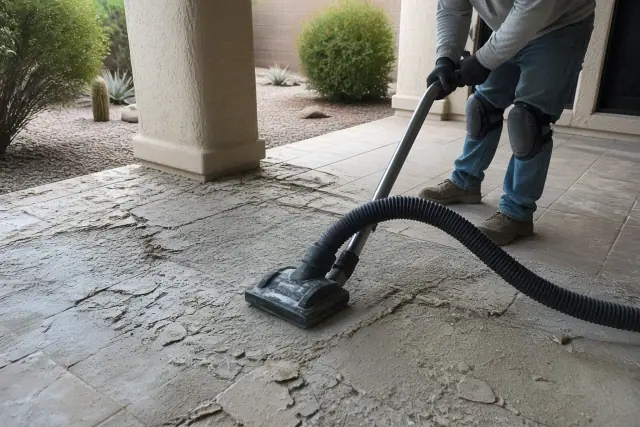
A ride-on or walk-behind scraper connects directly to a shrouded vacuum port. This setup captures debris at the point of impact instead of letting it spread through the room.
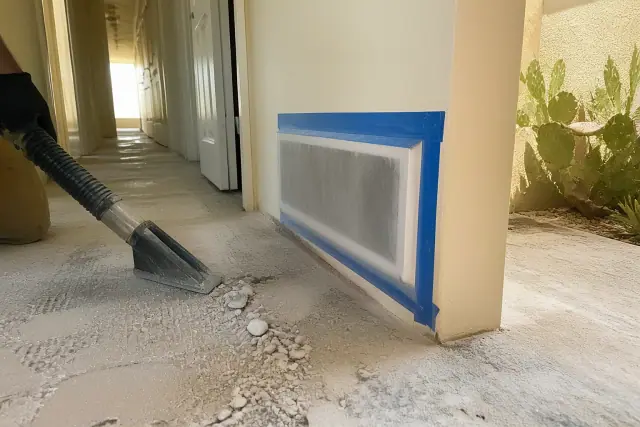
Poly sheeting, taped HVAC returns, and a contained work zone help keep fine debris from circulating beyond the demolition area in an occupied interior.
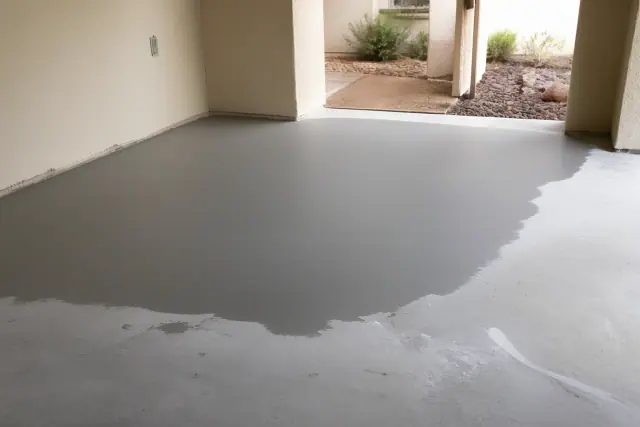
After residual thinset is vacuumed away, the exposed slab is easier to inspect for gouges, leveling needs, or repair before new tile installation.
Dustless removal is generally the stronger fit when people, furnishings, electronics, cabinetry, or operating work areas remain near the demolition zone.
Traditional removal can be reasonable for an unoccupied flip, detached garage, or small patio section when dust migration and indoor cleanup are limited concerns.
Most residential bathrooms finish in a single day, while a 1,000 to 1,500 square foot open floor plan typically takes one to two full days. Larger kitchen and living-area projects are usually scheduled across two days so slab preparation can follow removal.
A clear sightline can help an operator avoid gouging concrete or splintering plywood, but experience and correct blade selection matter more than whether the setup is dustless.
| Project situation | Dustless removal | Traditional removal |
|---|---|---|
| Occupied home or work near HVAC returns | Usually worth it because source extraction limits fine dust migration. | Lower removal cost, but dust can spread into rooms, contents, and ductwork. |
| Active restaurant, retail space, or office | Typically favored to support cleaner, more controlled demolition. | Airborne debris and cleanup can disrupt normal use of the space. |
| Vacant flip, detached garage, or open-air patio | Useful when adjacent finishes or equipment still need protection. | Can make sense when containment is not a major concern. |
| Natural stone or large-format porcelain | Shrouded equipment captures dust during more aggressive mortar removal. | Crew skill and tool selection remain critical to protecting the substrate. |
Dustless removal pairs mechanical demolition equipment with a HEPA-filtered vacuum so broken tile, thinset, and mastic move through shrouded ports into a sealed container instead of becoming airborne. Crews can add poly sheeting, tape HVAC returns, create negative air pressure where needed, and stage the vacuum outside or in a garage to reduce indoor noise and exhaust. The process supports control of respirable crystalline silica under OSHA standards and is especially relevant in Maricopa County, a PM10 nonattainment area under county air-quality regulations. That containment can be decisive in an older Encanto-Palmcroft slab home or a downtown Phoenix business that cannot shut down for widespread cleaning.
Tile type, mortar thickness, access, and substrate condition can move both the price and the schedule. Natural stone, granite, marble, slate, and large-format porcelain often have thicker mortar beds that require more aggressive extraction, while older plywood subfloors need gentler technique than the slab-on-grade construction common in Phoenix-area tract homes. Standard ceramic bathroom or kitchen floors often fall in the $3.50 to $5.00 per square foot range; hauling and disposal can add $300 to $600 on a mid-size job, with dumpster rental and hauling for a 1,000 square foot project running roughly $400 to $600. Tight showers and backsplashes need careful protection around vanities and cabinetry, while patio work may still require containment to protect nearby rooms or pool equipment. Restaurants, retail spaces, and offices commonly favor dustless methods so the surrounding space can remain usable. Phoenix Tile Flooring operates under Arizona Registrar of Contractors requirements and carries insurance coverage for its tile removal work.
For a small bathroom under 100 square feet, dustless removal can still be worthwhile because the enclosed space concentrates dust and the total price difference may be only a few hundred dollars. For 1,000 square feet, traditional removal may run about $1,000 to $2,000, compared with $3,000 to $7,000 for dustless removal before disposal. Either method can damage a subfloor when the operator uses the wrong blade or angle, so crew experience matters most. Common mistakes include failing to check for asbestos-containing mastic in homes built before the 1980s, leaving HVAC returns open, using an unshrouded demo hammer, and postponing slab or plywood evaluation until after demolition. After water damage or a failed shower pan, careful containment matters even more because surrounding materials may already be compromised.
Share the tile type, approximate square footage, access conditions, and whether the property will remain occupied. A site review can clarify containment, disposal, slab preparation, and the right removal method for a Salt River Valley project before you approve the estimate.