Material Lifespan Range
Ceramic can provide decades of service, but denser porcelain and natural stone generally set the longest starting range when the floor beneath them is sound.
Phoenix Tile Flooring explains why a tile floor can last from 20 years to more than 50 years-and why grout, bonding, or the substrate often fails before the tile body. For Phoenix homes, material choice, installation, traffic, moisture, and maintenance determine whether an existing floor still has decades ahead or needs repair.
Ceramic can provide decades of service, but denser porcelain and natural stone generally set the longest starting range when the floor beneath them is sound.
Four variables-substrate condition, installation method, tile grade, and maintenance-often determine whether a floor lasts closer to 20 years or 60. Grout, the adhesive bond, or the substrate usually gives way before the tile body.
Watch grout for cracks, powdering, discoloration, and gaps at tile edges. Keep porous stone sealed on schedule so staining and etching do not shorten the floor's practical life.
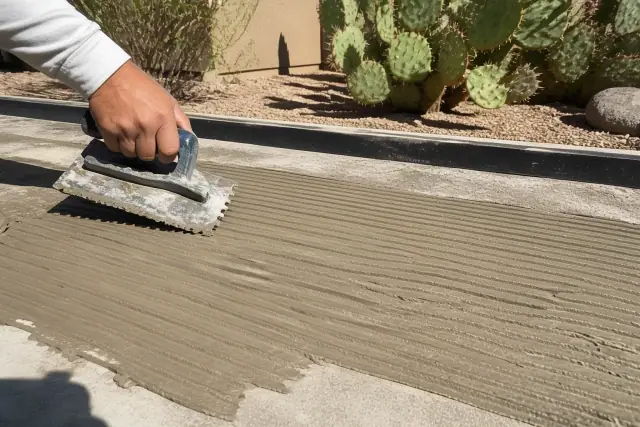
Even thinset coverage, a flat substrate, and a waterproofing membrane in wet areas support the tile above. These hidden layers determine whether the visible surface reaches its expected lifespan.
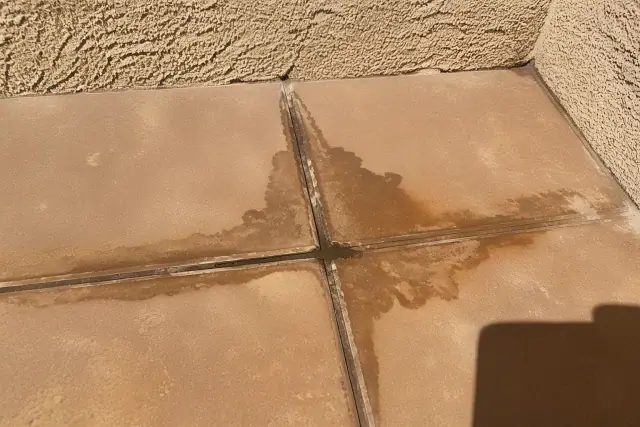
A hairline grout crack can create a moisture path toward the adhesive and substrate. That small surface symptom may be the first visible sign of damage below.
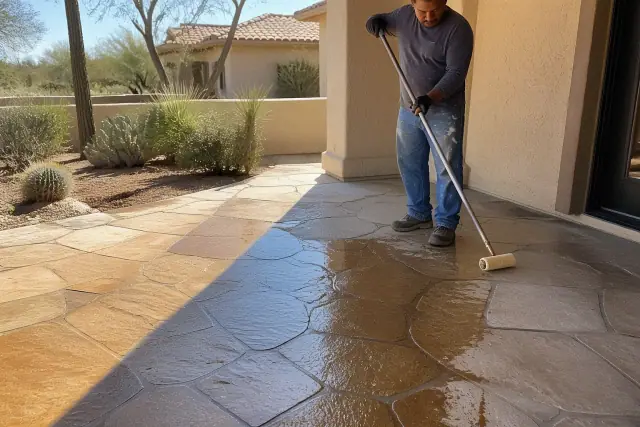
Maintained stone with clean joints contrasts sharply with porous stone bordered by stained, receding grout. Routine care preserves appearance before the tile itself wears out.
Porcelain and dense natural stone such as granite generally last the longest because low water absorption and high density help them resist moisture and wear.
Outdoor installations face intense UV, extreme summer heat, and monsoon downpours. Slip-resistant material, suitable outdoor tile, sound bonding, and maintained sealer matter more there than on a dry interior floor.
A few cracked tiles may be repairable if matching material is available and the substrate is sound. Replacement becomes more practical when more than roughly a third of the field has wear, cracking, or lippage, or when the substrate has failed.
Inconsistent thinset coverage, the wrong trowel size, and skipped waterproofing can cause owner-installed floors to fail within the first two to five years. Slab leaks and failed shower pans can also damage the subfloor while the tile above still looks intact.
| Tile Material | Typical Lifespan | Best-Fit Use |
|---|---|---|
| Ceramic | 20-50 years | Bathroom floors and backsplashes |
| Porcelain | 50+ years | Kitchens, showers, and high-traffic areas |
| Natural stone, including granite and slate | 50+ years | Entryways and commercial lobbies |
| Marble | 40-50+ years with sealing | Low-traffic accent areas |
| Travertine | 25-50 years with sealing | Outdoor patios and courtyards |
| Limestone | 25-50 years | Interior accent walls and floors |
| Terracotta | 20-40 years | Southwest-style patios |
| Glass tile | 20-30 years | Backsplashes and shower accents |
Structurally sound tile from the 1970s and 80s still exists in Phoenix homes around Arcadia and the Melrose District, showing how far a stable substrate and strong bond can carry a floor. In commercial spaces, heavier foot traffic may make a full refresh practical after 20-30 years even when individual tiles remain intact. Entryways, kitchen work triangles, and shower thresholds usually reveal traffic or moisture wear first.
Porcelain's low water absorption, tested under ASTM C373, makes it forgiving in demanding conditions, while floor applications need a PEI-rated tile suited to expected foot traffic. In running-bond layouts using tile over 15 inches long, limiting the offset to no more than one-third instead of 50% reduces lippage and stress cracking. TCNA Handbook methods and ANSI A108 setting standards provide a durable framework for substrate preparation, bonding, and wet-area waterproofing. Addressing cracked grout early also matters because a $300 regrouting need can grow into a $3,000 subfloor repair after moisture intrusion.
How often should grout be sealed, and what does replacement cost when maintenance is no longer enough? Resealing grout every 1-2 years can extend the interval before full regrouting, while ceramic tile material typically costs $5-$12 per square foot and complete Phoenix installation generally runs roughly $13-$65 per square foot. A straightforward 170-square-foot bathroom or kitchen often falls in the low-to-mid part of that installed range; removal, substrate repair, and waterproofing increase the scope. During tear-out that disturbs more than 100 square feet, silica-dust containment is also an important consideration under local air-quality rules.
If cracked grout, loose tile, lippage, or moisture makes the remaining lifespan unclear, describe the affected area and where the damage appears. A tile professional can inspect the substrate and help compare a focused repair with full replacement before new material goes down.