Verify Credentials
Ask for the Arizona ROC license number, bond amount, and certificate of insurance in writing, then verify the license directly. For projects over $1,000, the draft specifically calls for an active Arizona ROC license.
Phoenix Tile Flooring recommends asking about Arizona ROC licensing, tile-specific experience, substrate preparation, waterproofing, itemized costs, and written scheduling terms before work begins. Clear answers reveal whether a contractor's process fits your Phoenix tile project and help prevent an expensive callback six months later.
Ask for the Arizona ROC license number, bond amount, and certificate of insurance in writing, then verify the license directly. For projects over $1,000, the draft specifically calls for an active Arizona ROC license.
Ask which setting material, layout, and lippage-control method fits your tile. Also ask how the crew will confirm the TCNA flatness tolerance of 1/8 inch over 10 feet for most installations before setting begins.
Compare at least three written estimates and tie deposits, progress payments, and final payment to stated milestones. Require written approval for added substrate repair, transitions, outlet cutouts, or other scope changes.
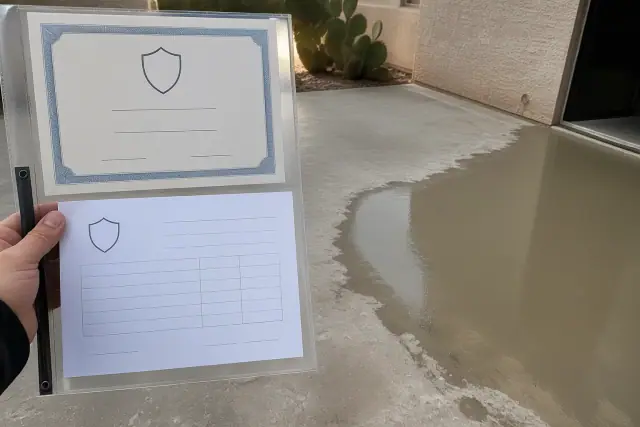
Comparing a contractor's license number, bond details, and insurance certificate before approving tile work gives you written proof of the credentials being claimed.
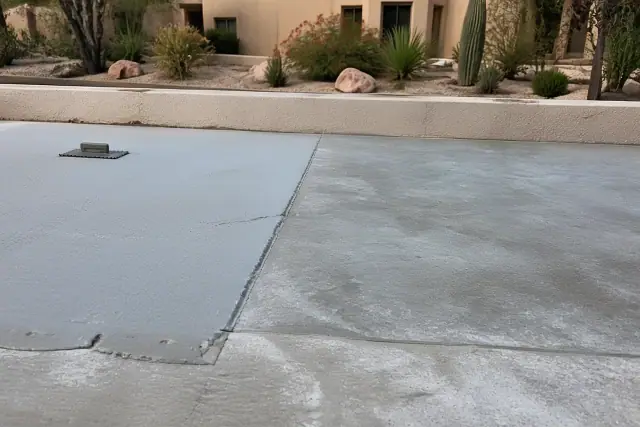
A Phoenix slab crack and a prepared wet-area surface make it easier to compare crack-isolation layers with liquid or sheet waterproofing membranes.
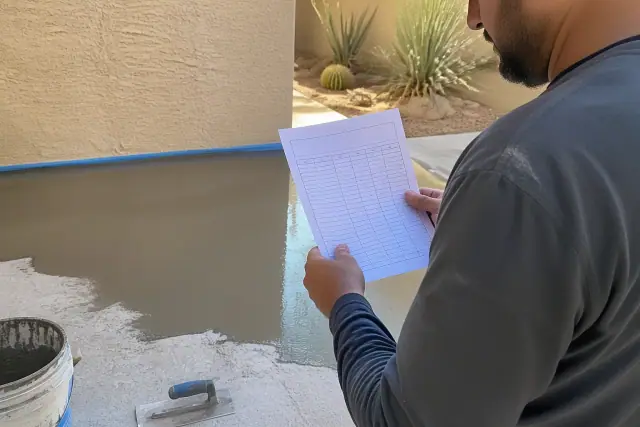
Separate estimate lines for demolition, substrate prep, waterproofing, materials, labor, and cleanup make payment milestones and change-order terms easier to evaluate.
Verify the license, bond, and insurance through separate proof points, then ask how many showers, bathrooms, backsplashes, or similar tile projects the crew completed in the last year.
For showers, ask for a liquid-applied or sheet membrane method that meets ANSI A118.10. For bathroom floors, discuss slip resistance and tile with a DCOF rating of 0.42 or higher under ANSI A326.3 guidelines.
Ask how crack-isolation, cure times, and movement joints address clay-heavy soil, slab movement, low humidity, UV exposure, and thermal expansion during 115-degree summer days.
Pause when a contractor will not provide a license number, written contract, project examples, or a clear substrate and waterproofing plan. Full payment upfront, same-day pressure, and verbal-only changes are additional warning signs.
| Question to Ask | A Strong Answer Includes | Reason to Pause |
|---|---|---|
| Can I verify your credentials? | An active Arizona ROC license number, bond details, and insurance certificate in writing. | Vague claims or no written proof. |
| How will you prepare the substrate? | A flatness check, a plan for slab cracks, and setting materials matched to the tile. | No substrate evaluation before tile setting. |
| How will you waterproof wet areas? | A named liquid or sheet membrane method that meets ANSI A118.10. | Waterproofing steps cannot be explained. |
| What is included in the estimate? | Separate lines for demolition, substrate prep, waterproofing, materials, labor, and cleanup. | One lump sum with no written change-order process. |
| How will schedule and payments work? | Start and completion windows, cure time, milestone payments, and final walkthrough terms. | Full payment upfront or verbal-only scope changes. |
| How will demolition dust be controlled? | Containment procedures and equipment with HEPA filtration. | No plan to contain silica dust. |
Strong answers connect credentials to the actual work: how the substrate will be checked, which setting and waterproofing methods apply, how the layout will be planned, and how scope changes will be documented. Ask references how the contractor handled slab cracks, plumbing conflicts, uneven subfloors, or discontinued tile rather than asking only whether the finished room looked good; grout cracks can appear within a year or two when movement and preparation are ignored.
A crew experienced with 12x24 porcelain may not have the leveling and lippage-control experience needed for 24x48 large-format tile, back-buttering, and heavier handling. Shower interviews should focus on slope and waterproofing; backsplash questions should cover outlets, corners, and grout color; repairs may require close matches for discontinued tile in older Willo or Encanto-Palmcroft homes; and exterior patios need UV, thermal-expansion, and movement-joint planning. Even Phoenix ranch homes from the 1960s and newer Desert Ridge builds can call for different substrate questions.
How long should the work take? A standard shower retile typically takes several days, a kitchen backsplash is often a one-to-two day job, and larger floors or full bathrooms take longer because layout and cure stages add time. When can grout be applied? Thinset usually needs 24 to 48 hours to cure, depending on the product and conditions. Also ask what the written warranty covers, how material backorders affect the schedule, and whether demolition containment uses HEPA filtration to limit silica dust while the home remains occupied.
Share the room, tile type, current surface, and any concerns about cracks, moisture, dust, or timing. The local team can help you define the questions and written scope your Phoenix tile project requires before work starts.